EUwatch publisher
-
One dead and 16 injured as vehicle drives into Berlin Pride crowd
euwatch.micro.blogPolice seek suspect as city’s mayor condemns ‘attack on our free and open society’
-
Latest news bulletin | July 26th, 2026 – Morning
euwatch.micro.blogCatch up with the most important stories from around Europe and beyond this July 26th, 2026 - latest news, breaking news, World, Business, Entertainment, Politics, Culture, Travel.
-
Chickenpox sweeps Gaza camps as thousands of cases emerge in two weeks
euwatch.micro.blogDoctors say the real scale of the outbreak is likely far larger, as overcrowding makes isolation impossible, and families of six or more share tents of a few square metres. Thousands of children born during the war could not complete their vaccination, leaving the most vulnerable without protection.
-
Iran war spreads to Red Sea and Caspian, Gulf quiet as U.S. forgoes strikes
euwatch.micro.blogThe Iran war broadened over the weekend despite a pause in U.S. strikes, as Yemen’s Iran-aligned Houthis attacked Saudi oil installations along the Red Sea coast and Iran accused Ukraine of targeting one of its vessels in the Caspian Sea.
The U.S. military said on Saturday its naval blockade against Iran “remains in full effect” but did not explain why it halted a streak of 13 nights of escalating strikes.
There were also no weekend reports of attacks by Iran on neighbors, similar to its daily rejoinders to the U.S. attacks.
Asked about the pause, a senior official in President Donald Trump’s administration said Trump “has always been clear that his preference is diplomacy, but he has shown Iran what will happen if they fail to come to the table in a serious way.”
Trump has decided, for now, to back away from plans to ramp up attacks on Iran, the New York Times said on Saturday, citing two people briefed on the discussion.
The president and his advisers, the newspaper said, have concerns about expanding the conflict, depleting defence stockpiles, alienating Middle East Gulf allies and affecting energy supplies and the global economy.
Vice President JD Vance and Gen. Dan Caine, the chairman of the Joint Chiefs of Staff, both raised concerns about the U.S. munitions stockpile with Trump during a White House meeting on Friday, a U.S. official told CNN.
Operations are “on a hold,” a Department of Defense source told the broadcaster on Saturday.
Despite the Gulf lull, Saturday’s fighting between Iran’s Houthi allies and Saudi Arabia showed that the war, which has already disrupted energy supplies through the Strait of Hormuz, could affect a second major shipping route and reignite Yemen’s civil war.
Iran directs Houthis to shut Red Sea gateway if U.S. strikes power infrastructure
Separately, Iran’s Foreign Ministry accused Ukraine of attacking an Iranian commercial vessel in the Caspian Sea, saying one sailor was killed and another injured.
The ministry summoned Ukraine’s chargé d’affaires in Tehran to protest over an attack it described as “hostile and criminal”, state news agency IRNA said.
The Iranian denunciation coincided with comments by Ukrainian President Volodymyr Zelenskyy that Kyiv had noted Russia was passing on to Iran its satellite observations in the Middle East, to enable it to direct strikes in the region.
Throughout the war in Ukraine, Kyiv has had to counter Iranian-designed drones deployed by Moscow.
Zelenskyy had earlier said that Ukraine’s forces struck a Russian warship and vessels used for transporting Iranian-linked military cargo in the Caspian Sea.
War threatens to spread to Yemen
Houthi military spokesperson Yahya Saree said the group struck sites belonging to Saudi state oil company Aramco in the cities of Jizan and Yanbu on Saturday.
A large column of smoke rose from the direction of the Aramco refinery in Jizan, near the Yemeni border, video on social media verified by Reuters showed. The refinery can process up to 400,000 barrels of crude oil daily.
Two Asia-based trading sources said they had been informed of potential damage to fuel and oil storage sites at Jizan. Aramco did not respond to requests for comment.
In Yanbu, two missiles aimed at oil installations were intercepted. Yanbu, Saudi Arabia’s main Red Sea oil port, has become a key route for Saudi oil skirting the Strait of Hormuz, which Iran has blockaded.
Saudi-led coalition strikes Hodeidah
In Yemen, officials said the air force of the Saudi-backed, internationally recognised government, which has opposed the Houthis for more than a decade, struck Houthi sites in the Marib and al-Jawf provinces.
The officials said both sides in Yemen’s civil war were mobilising forces along the front.
Saudi Arabia has led an Arab coalition battling the Houthis since the Iran-aligned fighters captured Yemen’s capital, Sanaa.
The civil war, in which famine and fighting killed hundreds of thousands, has been paused by a ceasefire since 2022.
But that truce broke down this month, with the Houthis effectively joining the wider war their Iranian allies have waged since being attacked by the United States and Israel five months ago.
The Houthis have declared a naval blockade of Saudi Arabia over the past week, and Houthi leader Abdul Malik al-Houthi said all Saudi oil facilities could be targets.
With Reuters
Caption: Students march over US and Israeli flags during a rally supporting the Houthi-imposed naval embargo against Saudi Arabia in Sana’a, Yemen, 22 July 2026. Hundreds of students gathered at Sanaa University to support the declaration. EPA/YAHYA ARHAB
-
EN DIRECT, guerre en Ukraine : la Russie « veut recevoir 30 000 soldats supplémentaires de Corée du Nord », affirme Volodymyr Zelensky
euwatch.micro.blogDans un message publié sur X, le président ukrainien a assuré que « des préparatifs sont en cours depuis juin dans la région russe de Voronej pour accueillir » ces renforts. Il a ajouté que Pyongyang « se prépare également à transférer des lanceurs supplémentaires de missiles balistiques à la Russie ».
-
Kirkenes, le petit port sur la nouvelle route de l’Arctique où grouillent les espions
euwatch.micro.blog« La ruée sur les ports » (16/16). Le réchauffement climatique pourrait changer le destin de la petite ville norvégienne de 3 500 habitants qui se situe sur une nouvelle route maritime, libérée par la fonte de la banquise, reliant l’Europe et l’Asie. Mais la proximité de la Russie et les tensions géopolitiques contrarient ses ambitions.
-
« Les drones sont la peste noire du troisième millénaire » : rencontre avec « Magyar », l’homme qui dirige la guerre des « oiseaux » en Ukraine
euwatch.micro.blogEx-homme d’affaires, à la tête du nouveau corps de drones sans pilote dont s’est dotée l’armée ukrainienne, Robert Brovdi, s’est rendu célèbre pour son décompte des soldats russes tués par sa brigade et pour ses vidéos trash. Il mène cet été l’opération « Crimée » et poursuit ses frappes sur les raffineries au cœur de la Russie.
-
Defence giants provide record backing for military start-ups
euwatch.micro.blogAs drones and autonomous systems transform the battlefield, traditional defence companies start to act more like venture capitalists
-
‘Divide and conquer’: China exploits EU divisions over trade
euwatch.micro.blogIndividual member states and companies vulnerable to coercion from Beijing, say analysts
-
Lead pollution poses health risk, says review sparked by FT investigation
euwatch.micro.blogAnimals reared near ex-mining sites ‘can have high, potentially toxic concentrations of metals’, academics find
-
CPS hires more trainee lawyers in bid to compete with Big Law
euwatch.micro.blogRecruitment drive comes as prosecution service grapples with growing caseload and backlogs in criminal courts
-
Vehicle mows down crowd at Berlin Pride festival, killing one
euwatch.micro.blogOne person has been killed and 17 injured, with some in life-threatening condition, after a vehicle mowed down a crowd near Berlin’s Pride celebrations on Saturday evening, setting off a manhunt for those responsible, the police said.
Hours after the apparent attack many details remained unclear, but police said the vehicle struck multiple people after charging into the city’s central Tiergarten park close to the Brandenburg Gate. They later said they had identified an Islamist as a suspect and were seeking his arrest.
“According to our latest information, the vehicle drove … into the Tiergarten around 10 p.m. (2000 GMT), injuring several people in the process, and then came to a standstill after hitting a tree here in the Tiergarten,” a police spokesperson at the scene said.
“It was empty, which is why we are currently working intensively to track down the perpetrator or perpetrators.”
Eight seriously injured
Among the injured, eight had serious injuries and of those, three were in life-threatening condition, a fire brigade spokesperson said.
“We have now identified a suspected perpetrator. Measures against this suspected perpetrator, who has not yet been arrested, are underway. However, this suspected perpetrator is known to the police as a member of the Islamist scene here in Berlin,” the police spokesperson told reporters.
The police said the vehicle was white, describing it as possibly a car or minivan or minibus. Tabloid newspaper Bild cited a witness as saying it was a van and that a man emerged from it and fled on foot.
Hundreds of thousands of people had gathered peacefully in the German capital for the annual Christopher Street Day celebrations, one of Europe’s largest LGBTQ events, before the apparent attack brought it to an abrupt end.
A large number of emergency service vehicles were at the scene.
“It’s one of the worst days for the queer community and a day I personally hoped I’d never have to experience… I’m shocked,” said Julian Miethig, who attended the event.
Christopher Street Day draws hundreds of thousands of people to the German capital each year. The event commemorates the 1969 Stonewall uprising in New York and combines a parade with political demands for equality, inclusion and protection against discrimination.
Series of car attacks
First held in West Berlin in 1979, the CSD has grown from a small demonstration into a major fixture of the city’s cultural and political calendar. The parade is the centrepiece of the CSD, but it is accompanied by a range of political, cultural and party events held across the city.
Germany has in recent years suffered a series of incidents in which a car has charged into a crowd, causing deaths.
In May, a man believed to have mental health issues drove his car into a central pedestrian zone of the eastern German city of Leipzig, killing two people and seriously injuring three.
Last year, two people were killed in the western city of Mannheim when a 40-year-old man whom authorities described as psychologically unwell drove a car into a group of pedestrians. Weeks before that, an Afghan national suspected by prosecutors of having carried out a similar attack on a trade union demonstration in Munich, killing two and injuring more than 40, including children.
In December 2024, several people were killed in a car-ramming attack on a Christmas market in the eastern city of Magdeburg. The suspected perpetrator was a psychiatrist from Saudi Arabia with a history of anti-Islamic rhetoric who had lived in Germany for almost two decades.
With Reuters
Caption: Berlin Mayor Kai Wegner (R) speaks to media near the scene where several people were injured on the sideline of the Christopher Street Day (CSD) parade in Berlin, Germany, 25 July 2026. According to organizers, the event was called off. Shortly before that, an incident occurred at the Tiergarten where, according to police, a vehicle ploughed into a crowd. EPA/CLEMENS BILAN
-
A Glasgow, quinze interpellations en marge d’un affrontement entre manifestants anti-immigration et antiracistes
euwatch.micro.blogLa plus grande ville d’Ecosse est régulièrement agitée par des mobilisations de personnes hostiles à l’immigration, ou aux immigrés eux-mêmes, des rassemblements organisées notamment par des groupes identitaires.
-
Marche des fiertés de Berlin : un véhicule percute la foule, faisant un mort et seize blessés
euwatch.micro.blogLe chancelier allemand, Friedrich Merz, a appelé à « faire toute la lumière » sur le drame, qu’il a qualifié d’« acte abominable ». Un suspect, pas encore interpellé, serait « lié au milieu islamiste », selon la police.
-
À Berlin, un remaniement ministériel chaotique en plein été
euwatch.micro.blogLe 19 juillet, Jens Spahn, le chef du groupe parlementaire, a annoncé sa démission après avoir eu recours à une gestation pour autrui à l’étranger avec son compagnon.
Cette décision a provoqué un remaniement ministériel chaotique qui divise la CDU.
- Spahn représentait l’aile libérale-conservatrice du parti, qui n’a pas hésité par le passé à afficher sa proximité avec différentes personnalités de la droite américaine MAGA, comme Richard Grenell, ambassadeur des États-Unis à Berlin pendant le premier mandat du président républicain et désormais chroniqueur à Fox News 1.
- Par l’intermédiaire de son conjoint, le journaliste Daniel Funke, Spahn entretenait des liens très cordiaux avec le groupe Springer, qui domine la presse conservatrice en Allemagne avec ses journaux Bild et Die Welt.
- Élu au Bundestag sans discontinuer depuis 2002, à l’âge de 22 ans, Jens Spahn a connu un parcours complexe, passant de l’opposition interne à Angela Merkel à celle de Friedrich Merz, avant de devenir cheville ouvrière de plusieurs gouvernements.
- En 2017, il se fait remarquer en étant l’un des premiers députés de la CDU à s’opposer à la ligne d’Angela Merkel et à demander son retrait. En 2018, la chancelière le fait entrer au gouvernement, où le jeune homme ambitieux est soumis à la discipline gouvernementale. Mais à l’automne de la même année, la chancelière annonce qu’elle ne sera plus candidate en 2021.
- Spahn dévoile alors ses ambitions de diriger la CDU. Lors de l’élection à la présidence du parti en décembre 2018, il recueille 15 % des suffrages, et ne se qualifie pas pour le second tour, remporté par Annegret Kramp-Karrenbauer avec 51 % des voix contre 48 % pour Friedrich Merz.
- Suite à la démission de Kramp-Karrenbauer, il renonce à se présenter et soutient Armin Laschet, bien que ce dernier ait un profil plus « centriste » que Friedrich Merz.
En tant que ministre de la Santé, Jens Spahn a dû faire face à la pandémie de Covid-19. Il est également impliqué dans « l’affaire des masques », dans laquelle il est accusé de favoritisme dans l’attribution de marchés publics.
- Une partie des masques a été achetée à une entreprise dont le mari de Spahn est salarié, tandis qu’une entreprise de logistique de sa circonscription parlementaire a été privilégiée pour une autre tranche du contrat, en dépit des procédures habituelles.
- Malgré cette affaire, Spahn succède à Friedrich Merz en 2025 à la tête du groupe parlementaire CDU/CSU. Ce poste est l’un des plus importants du système politique allemand et confère à son titulaire une autorité équivalente à celle d’un ministre. Les chefs de groupe parlementaire siègent avec le chancelier et les chefs de parti au sein du « comité de coalition » (Koalitionsausschuss), où sont fixées les grandes orientations et décisions du gouvernement.
En mai dernier, il avait été confirmé à la tête du groupe parlementaire avec une large majorité, renforçant ainsi son statut d’homme clef du système Merz. Il était même envisagé comme un possible remplaçant du chancelier, dont l’impopularité est record 2.
- L’Union doit faire face à trois élections régionales très difficiles à l’automne, en Saxe-Anhalt, en Mecklembourg-Poméranie-Occidentale et à Berlin. Un homme politique qui contourne les interdictions qu’il a lui-même contribué à mettre en place ne peut que nuire aux chrétiens-démocrates.
- Au sein même du parti, les demandes de démission les plus fortes sont venues de la Frauen Union, l’organisation des femmes chrétiennes-démocrates, qui dénoncent une forme d’hypocrisie et de double standard de la part de Spahn. La CDU se fonde en effet sur la doctrine chrétienne et s’oppose à la GPA, qu’elle soit marchande ou altruiste.
- Dans sa lettre de démission, Jens Spahn reconnaît que la réalisation de son bonheur familial n’était pas compatible avec ses fonctions politiques, sans pour autant remettre en cause l’acte lui-même, qui constitue un contournement de la loi et de la ligne politique défendue par le groupe parlementaire qu’il dirigeait 3.
Un carrousel improvisé en plein été
Plusieurs candidats ont initialement été envisagés pour prendre la suite du chef du groupe parlementaire, avant que Thorsten Frei, chef de la chancellerie avec rang de ministre, ne soit désigné.
- Frei, âgé de 52 ans, a occupé le poste de « Parlamentarischer Geschäftsführer », c’est-à-dire de chef de file adjoint (ou « whip » dans le système de Westminster), aux côtés du chef du groupe parlementaire Friedrich Merz, de 2021 à 2025.
- Accompagnant ce dernier à la chancellerie, Thorsten Frei a été critiqué pour sa gestion courante et sa coordination de l’exécutif, des critiques relayées par la presse. Il retrouve ici un poste législatif dans lequel il se sentira peut-être plus à l’aise et qui ne représente pas un danger pour Friedrich Merz, contrairement à son prédécesseur.
- Nina Warken, 47 ans, qui était jusqu’ici ministre de la Santé, prend la place de Thorsten Frei à la tête de la chancellerie fédérale. Cette juriste de formation s’est distinguée par sa gestion sobre, discrète et sans polémiques d’une réforme difficile du système de santé au printemps de cette année.
- Le secrétaire général actuel de la CDU/CSU, Carsten Linnemann (48 ans), un proche de Friedrich Merz, lui succède au ministère de la Santé. Sa nomination, alors qu’il avait refusé ce poste lors de la formation du gouvernement en avril 2025, ressemble à une exfiltration. Le secrétaire général est en effet chargé d’organiser les campagnes électorales du parti. Or, les élections régionales de l’automne s’annoncent difficiles pour la CDU/CSU. C’est dans ce contexte extrêmement délicat que Franziska Hoppermann, 44 ans, députée au Bundestag et actuelle trésorière de l’Union chrétienne démocrate, devrait prendre sa suite.
Friedrich Merz semble avoir choisi d’utiliser le départ forcé de Jens Spahn pour créer une nouvelle dynamique gouvernementale et a également décidé de remplacer le ministre des Transports, Patrick Schnieder.
- Le député rhénan de 58 ans a d’abord lui-même annoncé son départ à ses collaborateurs par SMS, le 23 juillet au soir.
- Mais son successeur potentiel, le député Fritz Güntzler, âgé de 60 ans, a refusé dans la nuit du 23 au 24 juillet le portefeuille des Transports que le chancelier lui proposait. L’attitude de Friedrich Merz, qui a donc congédié un ministre sans avoir de remplaçant confirmé, a déclenché des réactions de mécontentement parmi les députés concernant le traitement infligé à Schnieder.
- Au-delà, la perplexité quant aux choix de gestion humaine du chef du gouvernement domine la presse allemande.
Die Positionen, die Patrick Schnieder als Minister vertreten hat, haben Rückhalt in der Fraktion. Durch seine anständige und verlässliche Art genießt er ein großes persönliches Vertrauen.
— Carl-Philipp Sassenrath (@cpsassenrath) July 25, 2026- Ainsi, selon la presse, le chancelier serait insatisfait du travail de Patrick Schnieder, dont le ministère a la lourde responsabilité de remettre sur pied l’infrastructure routière et ferroviaire du pays, affaiblie par deux décennies de sous-investissement, grâce à un fonds spécial.
Ich kenne & schätze @PSchnieder seit anderthalb Jahrzehnten. Er ist ein erfahrener Fachmann, harter Arbeiter und großartiger Mensch & Freund. Der Umgang mit ihm macht mich betroffen & wütend und weder seiner Person noch seiner Leistung gerecht.
— Peter Altmaier (@peteraltmaier) July 24, 2026- Ce renvoi sec et sans successeur a irrité l’ancien ministre de l’économie Peter Altmaier, mais aussi le ministre-président de Rhénanie-Palatinat, Gordon Schnieder, vainqueur des élections régionales de mars, et frère du ministre démissionnaire.
L’article À Berlin, un remaniement ministériel chaotique en plein été est apparu en premier sur Le Grand Continent.
-
Trump shares Loomer’s interview with Zelenskyy amid Ukraine aid tensions
euwatch.micro.blogPresident Donald Trump has publicly amplified an exclusive 44-minute interview between conservative influencer Laura Loomer and Ukrainian President Volodymyr Zelenskyy, praising the exchange as “Very good!!!” on Truth Social. The move comes as questions persist about U.S. support for Ukraine and shifting attitudes within Trump’s political base.
WATCH:
Laura Loomer Interviews Ukrainian President Volodymyr Zelenskyy @ZelenskyyUa at Mariinsky Palace in Kyiv, Ukraine. 🇺🇦 🇺🇸
Enjoy! @APUkraine @POTUS @WhiteHouse @KremlinRussia_E pic.twitter.com/6o53trow9X
— Laura Loomer (@LauraLoomer) July 24, 2026
Loomer, a longtime Trump ally known for her sharp online commentary, traveled to Kyiv this week and sat down with Zelenskyy at Mariinsky Palace. The interview, conducted for her Rumble show Loomer Unleashed, covers the state of U.S.-Ukraine relations, peace prospects, and the evolution of personal dynamics between the two leaders. Trump shared a clip in which Zelenskyy described a brief private conversation with Trump at the Vatican in April 2025 as a “historic moment” that improved their relationship after a contentious Oval Office meeting earlier in Trump’s term.
In the Oval Office on 24 July, a reporter asked Trump about his decision to repost the interview and about reports of growing MAGA support for Ukraine. Trump replied, “I think they support what I support,” underscoring his influence over his base’s foreign policy views.
The development is notable because Loomer had previously been one of the more vocal skeptics of U.S. military aid to Ukraine. For years she minimized aspects of Russia’s invasion, echoed claims about Ukrainian extremism, and questioned the value of continued American involvement. During her recent trip she experienced an air raid in Kyiv, toured damaged sites, and publicly reversed course.
Laura Loomer: I feel really terrible for some of the things that I've said. So I would like to apologize on your show to the people of Ukraine for some of the things that I've said about your country, because they've been very kind to me. And I highly doubt that I would be… pic.twitter.com/v9FP4i5q2U
— Ostap Yarysh (@OstapYarysh) July 24, 2026
“Just experienced my first air raid in Ukraine. Sirens blaring. This is everyday for every Ukrainian,” she wrote. “I often said I don’t care. Looking back, that wasn’t very nice of me to say. We need to have moral clarity.” She later acknowledged having been influenced by what she called Russian propaganda online.
Zelenskyy’s office welcomed the attention, thanking Trump for U.S. support – including Patriot missile systems – and noting that Loomer’s team had heard recent Russian attacks. In the interview, Zelenskyy said he remains open to a peace deal, stating he is prepared to meet Trump at the Oval Office or Mar-a-Lago and that a ceasefire could be preferable to prolonged fighting if it saves lives. He described Trump as a “good, strong leader,” while naming Abraham Lincoln as the best U.S. president when asked.
The episode unfolds against a backdrop of ongoing debates over Ukraine aid. Elements of the MAGA movement have long been wary of open-ended support, favouring an “America First” approach that prioritizes ending the conflict quickly and limiting U.S. expenditures. Trump’s administration has balanced pressure on Russia with continued assistance, and his endorsement of Loomer’s more supportive tone may signal an effort to align the base with current policy. Zelenskyy is expected to meet Trump at the White House in the coming days.
Analysts note that high-profile conversions like Loomer’s could help soften skepticism among some conservatives, though significant portions of the base remain focused on domestic priorities and skeptical of long-term entanglement. The full interview has been released, and its broader reception within Trump’s coalition will likely shape the next phase of the discussion on U.S. policy toward the war.
Caption: Screenshot from the interview by Laura Loomer [EUalive]
-
Rights group condemns appointment of genocide denier as Montenegrin minister
euwatch.micro.blogThe Montenegrin human rights organisation Human Rights Action (HRA) has strongly condemned the appointment of Jovan Vučurović as minister without portfolio in the third reconstruction of Montenegro’s 44th government.
In a public statement, HRA described Vučurović as a person known for denying the Srebrenica genocide and for holding a series of other positions incompatible with a government post in a civic and European-oriented Montenegro.
According to the organisation, Vučurović has publicly denied the genocide in Srebrenica, glorified Chetnik ideology, belittled LGBTIQ+ people and disregarded their rights, taken part in the celebration of the unconstitutional Day of Republika Srpska, and referred to Kosovo as a “fake state.” HRA stressed that someone with such publicly expressed views cannot be considered fit to serve as a minister in a government that is obliged to protect human rights, respect international law and foster good-neighbourly relations.
(The Chetniks were a Serbian nationalist and royalist guerrilla movement during World War II, known for collaboration with Axis forces and for committing war crimes against non-Serb populations in the former Yugoslavia.)
The organisation highlighted a particular paradox: Vučurović’s appointment was supported by the very minority parties that in 2021 voted to dismiss then Justice Minister Vladimir Leposavić for relativising the Srebrenica genocide. Representatives of the Bosniak Party and the Albanian Forum voted in favour of Vučurović’s appointment, with the exception of Bosniak Party MP Kenana Strujić Harbić, independent MP Maja Vučelić and Albanian Alliance MP Ilir Čapuni.
HRA reminded that members of the government represent the state of Montenegro, not only the parties that nominate them, and that the selection of a person with such views seriously damages the country’s credibility.
The organisation also noted that the European Union expects Montenegro to respect human rights, accept judicially established facts about war crimes, and pursue a sincere confrontation with the past.
“The European body of civilisational values based on human rights is not a menu from which one can pick and choose according to preference – these values can only be respected as a whole,” HRA concluded.
As the current frontrunner in the EU accession process, Montenegro can ill afford scandals of this kind that risk undermining its European credentials. Pro-Serbian political forces in Montenegro are widely seen as seeking to derail the country’s path toward EU membership.
The article in Montenegrin by EUalive’s partner AntenaM can be found here.
Caption: Activists protest the appointment of Jovan Vučurović as minister. [Portalanalitika.me]
-
Tunisia marks Saied's emergency measures anniversary amid deadly power crisis
euwatch.micro.blogBetween 150 and 200 people are reported dead after more than a week of blackouts during an exceptional heatwave, as Tunisia marks five years since President Kais Saied suspended parliament and concentrated power in the presidency. The authorities have not confirmed the death toll.
-
Latest news bulletin | July 25th, 2026 – Morning
euwatch.micro.blogCatch up with the most important stories from around Europe and beyond this July 25th, 2026 - latest news, breaking news, World, Business, Entertainment, Politics, Culture, Travel.
-
Entre surveillance et censure, comment informer sur la Russie et l’Iran ?
euwatch.micro.blog« Festival international de journalisme » (2/7). Etre journaliste en Iran et en Russie est souvent compliqué. Alors, comment continuer d’informer malgré tout ?
-
Tens of thousands flee fires in France, blazes merge outside Madrid
euwatch.micro.blogTens of thousands of people fled wildfires in southwest France by car and boat on Friday, and Spain declared a national emergency as huge blazes merged outside Madrid and searing heat left tinder-dry conditions across the region.
French authorities ordered the total evacuation of the Cap Ferret peninsula, a tourism hotspot on its Atlantic Coast. A third fire was on the verge of joining two fires that had merged outside Madrid, government officials said.
Both countries, which have suffered a succession of heatwaves and fires in recent months and years that scientists say have been exacerbated by climate change, sought help from the European Union as the blazes strained emergency services.
French President Emmanuel Macron asked the army to support firefighting efforts, a source close to the president said.
Spain’s national emergency – the first it had ever declared over a wildfire – opened up federal funding to tackle the crisis.
“This is the worst wildfire in our region’s history,” Madrid’s regional leader Isabel Diaz Ayuso said after telling reporters the fires had merged. “It’s the perfect storm of very high temperatures and ceaseless winds that aren’t letting up.”
The clouds became ‘darker and darker’
In southwest France, authorities sent boats to help the evacuation, and about 110,000 people, many of them tourists, were told to leave as two major fires threatened homes and campsites, officials said.
“This is a convective fire: It is self-sustaining, changes direction, and is moving mainly eastward, toward the Bordeaux metropolitan area,” Interior Minister Laurent Nunez told broadcaster TF1.
Yoan Urien, who fled late on Thursday after police ordered his neighbourhood in the town of Biscarrosse to evacuate, said it was possible to see the fires from his home.
“We could see the clouds becoming darker and darker,” the 26-year-old told Reuters.
Marie Duelz, a 51-year-old Belgian tourist vacationing at Cap Ferret, said she saw “a cloud of ash that was blocking the sun, basically.”
The other major fire, which began in the nearby village of Saumos, north of Cap Ferret, is threatening to cut off the only road out of the peninsula and is the largest so far this season in France, Nunez told local television.
It has torn through more than 14,000 hectares of forest and destroyed more than 100 homes and one campsite, officials said.
“It breaks my heart. Because it’s such a pleasant place to live, seeing it go up in smoke is truly sad,” said family caregiver Corinne Paillaube.
“It’s totally apocalyptic,” said Ambre Dubos, from the nearby Landes region.
‘There was a ball of fire’
In Spain, more than 19,000 people were ordered to evacuate from towns in the mountains west of Madrid, as more than 2,000 personnel and 10 aircraft struggled in vain to prevent the fires converging, Interior Minister Fernando Grande-Marlaska said.
“I had to run from my house. There was a ball of fire. If I’d taken five more minutes, it would have wiped us out,” evacuee Enrique Martin said in a shelter in Cebreros, west of Madrid.
A third fire in Avila province was on the verge or may have already merged with the two in Madrid, Nicanor Sen, the government representative for the Castile and Leon region, told reporters. Spanish police said they had arrested one person and were investigating another suspected of starting that fire by using heavy machinery in a prohibited area.
The area west of Madrid, where many residents from the capital have second homes, is densely populated. In just one development 43 homes had been destroyed, Diaz Ayuso said.
That played a role in the government decision to declare a national emergency, Grande-Marlaska said.
It is the second consecutive year that Spain has faced a particularly destructive fire season.
More than 29 major fires have broken out in Spain so far this year, damaging a surface area five times greater than at the same stage in 2025, when a record area was destroyed, Environment Minister Sara Aagesen said in a social media post.
Heat hit crops, nuclear plant cooling
Wildfires have burned more land in Europe already this year than the annual average in the past two decades, data shows as the world’s fastest-warming continent has endured three stifling, virtually back-to-back heatwaves so far this year.
Scientists say human-driven climate change is increasing the intensity of heatwaves, droughts and wildfires, while also creating conditions for sudden, destructive storms.
Greece was sending two firefighting aircraft to Spain, and Croatia provided a similar plane and staff to aid France while Italy dispatched a firefighting plane to Tunisia which also has wildfires, authorities said.
After a short reprieve over the weekend, average temperatures in France are expected to rise sharply again next week, according to official weather forecaster Meteo France. The high temperatures are expected to warm French rivers that cool nuclear reactors and could lead to reduced power output. The Golfech 2 nuclear reactor in southern France has remained offline since July 7 due to heat-related restrictions, operator EDF’s data showed.
Weeks of hot weather are also taking a toll on the condition of the maize crop in France.
With Reuters
Caption: Smoke rises over a pine forest during a wildfire spreading in Cap Ferret, in Lege-Cap-Ferret, south-western France, 24 July 2026. French Interior Minister Laurent Nunez confirmed that around 40,000 people are being evacuated from the Cap Ferret peninsula due to the wildfires following a total evacuation order issued by authorities for the southwestern region. EPA/JULIEN REGUL
-
NATO’s Torrejón command ordered Romanian F-16 to shoot down Shahed-type drone
euwatch.micro.blogA Romanian Air Force F-16 fighter jet shot down a drone that had entered Romania’s airspace on Friday morning, marking the first time the country has destroyed an aerial intruder over its own territory. The decision to engage the target was taken by NATO’s Combined Air Operations Centre in Torrejón, Spain.
According to EUalive’s media partner Espress, Romanian Ministry of National Defence (MApN) officials confirmed in a press conference that the drone was classified as a “hostile” element by the NATO command in Torrejón and that the order to shoot it down was issued from there.
President Nicușor Dan announced the incident shortly after it occurred, stating that a Romanian pilot flying an F-16 had downed the drone around 11:00 local time. “We had a drone in the airspace. It was shot down a few minutes ago, around 11:00, by a Romanian pilot on an F-16,” he said. Dan underlined that the drone was over an uninhabited area near the locality of Padina in Buzău County, allowing the pilot to fire safely from above.
Radar systems of the Romanian Ministry of Defence first detected the aerial target at 09:39, approximately 20 km east of Sulina on the Black Sea coast. It entered national airspace and followed a trajectory towards Brăila, Fetești and Buzău. Two Italian Air Force Eurofighter Typhoons, deployed at Mihail Kogălniceanu Air Base under NATO’s Air Policing mission, scrambled at 09:48. Two Romanian F-16s from the 86th Air Base at Fetești took off later, at 10:56.
The Italian jets attempted an engagement but missed. A Romanian F-16 subsequently locked onto the target and destroyed it with a missile at 11:02 over the uninhabited area near Padina.
Pilots who visually identified the drone reported that it was of Shahed type – the Iranian-designed kamikaze drones (also known as Geran-2 in Russian service) that Russia has extensively used against Ukraine. Officials stressed that the drone was not heading towards Fetești Air Base or Bucharest.
The overnight period preceding the incident had already been marked by intense hostile activity near Romanian airspace, particularly in the Odesa area, with repeated air-raid alerts.
NATO’s Allied Air Command later described the operation as a successful multinational effort under alliance command and control, underlining that NATO remains ready to respond to any potential air threats around the clock to protect Allied territory and populations.
Investigations into the wreckage and the precise origin of the drone are ongoing. The incident is the first confirmed case of a NATO member state shooting down a drone deep inside its own airspace since the start of Russia’s full-scale invasion of Ukraine.
The article in Romanian by EUalive’s partner Espress.ro can be found here.
Caption: A Romanian F-16 [X account of the Ministry of Defence of Romania]
-
EN DIRECT, guerre en Ukraine : au moins deux personnes tuées dans une frappe russe à Soumy, dans le nord du pays
euwatch.micro.blogCes frappes surviennent au lendemain d’une attaque de missile russe contre une démonstration d’équipements militaires, dans la région de Kiev, qui a tué vendredi au moins dix personnes.
-
Guerre d’Espagne : « Comment j’ai retrouvé la trace de mon arrière-grand-père républicain, oublié des fosses communes »
euwatch.micro.blogComme plus de 100 000 autres républicains, José Molina Lopez a été jeté dans l’anonymat d’une fosse et sa mémoire confisquée par le récit national imposé par Franco. La journaliste Garance Muñoz a exhumé le passé de son arrière-grand-père. Un pèlerinage en forme de réparation rendu possible grâce aux lois de mémoire successives votées depuis 2007.
-
De propagandiste du Kremlin à avocate de la cause ukrainienne : la conversion spectaculaire de Laura Loomer, l’influenceuse MAGA qui a l’oreille de Donald Trump
euwatch.micro.blogUn an après s’être fait remarquer en obtenant la tête du directeur de la National Security Agency (NSA), l’influenceuse de 33 ans a rencontré Volodymyr Zelensky à Kiev. Rappelant avoir cru que « l’armée ukrainienne n’était qu’une bande de nazis », elle a « admis être tombée dans la propagande russe ».
-
Andy Burnham’s regional privilege
euwatch.micro.blogReflections on an under-scrutinised prime minister
-
Europe can’t stop the tide of cocaine
euwatch.micro.blogThe drug is more available now than in its 1980s heyday as street prices tumble and purity improves
-
The gig is now the content, and the content is the gig
euwatch.micro.blogDelivery drivers are filming their shifts and streaming the results online, turning the app economy into comfort viewing
-
Nicola Benedetti: ‘A festival should have a tinge of chaos’
euwatch.micro.blogThe violinist reflects on her journey from teen prodigy to the Edinburgh International Festival — and her mission to make the arts truly inclusive
-
Is Salzburg Festival’s radical era over?
euwatch.micro.blogMarkus Hinterhäuser introduced bracingly modern works and stagings. Then in March he was fired, raising questions about the future
-
Almanac, the homeware shop where Britain and Tuscany meet
euwatch.micro.blogThe Pietrasantra store stocks local Italian ceramics and glassware alongside cult finds and antiques
-
Skip San Sebastián — its Basque neighbour is an under-the-radar treat for foodies
euwatch.micro.blogThe pintxos are just as good in low-key, laid-back Hondarribia
-
EN DIRECT, guerre en Ukraine : une frappe de drone russe fait au moins deux morts à Soumy, dans le nord du pays
euwatch.micro.blogCes frappes surviennent au lendemain d’une attaque de missile russe contre une démonstration d’équipements militaires, dans la région de Kiev, qui a tué vendredi au moins dix personnes et blessé près d’une centaine d’autres, à des degrés divers.
-
Querelle des Anciens et des Modernes en Ukraine, valse des généraux et reprise des négociations ?
euwatch.micro.blog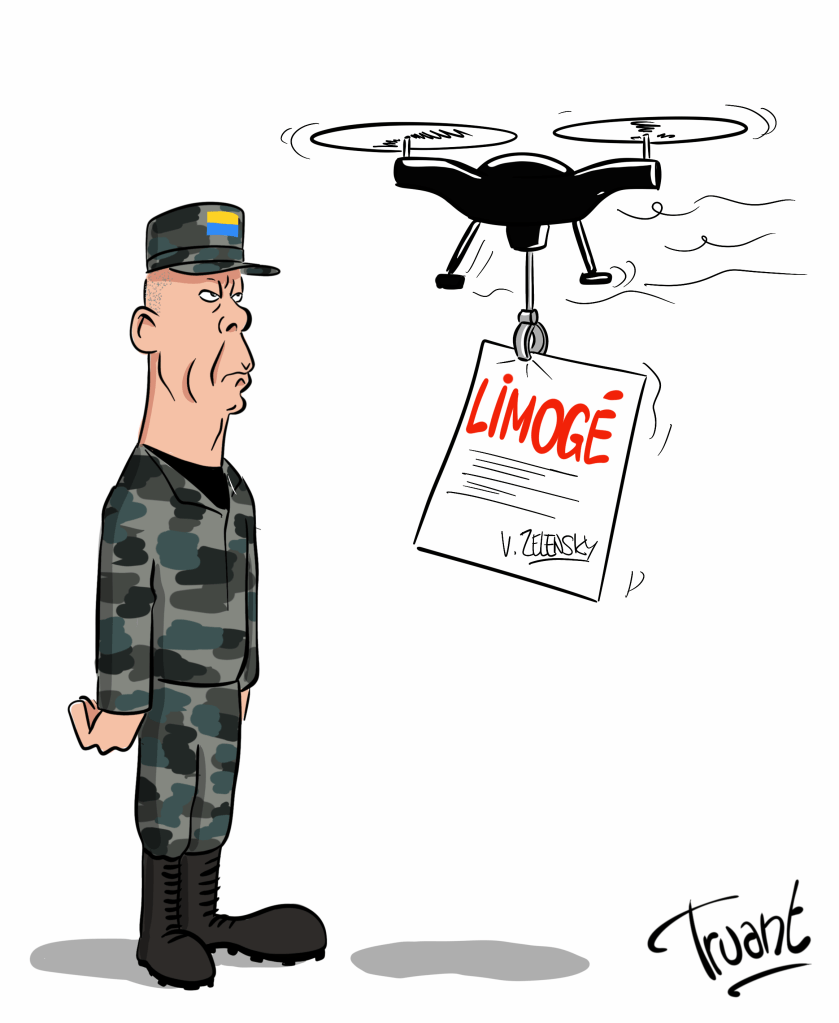
La direction de l’Ukraine a été marquée mi-juillet par une série de remplacements, de sorties et de nominations, concernant les affaires militaires et de défense en particulier. N’étant pas un observateur de la vie politique en Ukraine, je laisse à d’autres le soin d’expliquer les ressorts et les conséquences pour leur société. Mais dans cette publication, je voudrais souligner un aspect très important concernant cette vague de nominations que je pourrais résumer par une querelle, par nature infinie, « entre les Anciens et les Modernes », une polémique liée à la transformation de la guerre et à la difficulté pour les institutions militaires de se réformer.
La guerre en Ukraine s’est complètement transformée au point de révolutionner le système de défense
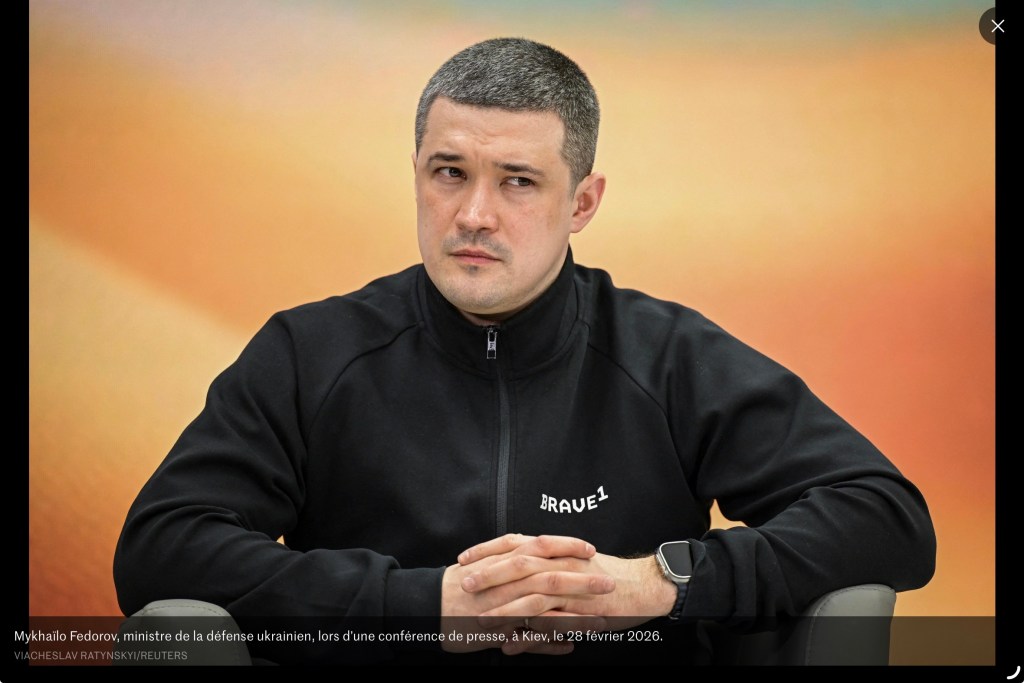
Contrairement aux apparences, ce ne sont pas deux personnalités incompatibles, le ministre de la défense Fedorov et le général Syrsky, chef d’état-major des armées, que le président Zelensky a dû séparer, mais deux approches complètement différentes de la guerre.
En effet, la guerre en Ukraine s’est transformée, notamment depuis 2025 avec l’emploi massif de drones et l’utilisation de l’Intelligence Artificielle. Celle-ci permet de se défaire des contraintes de pilotage physique (plus besoin d’avoir un pilote par drone) et dans une large mesure du brouillage (le drone s’autopilote) : il n’a quasiment plus besoin de recevoir des instructions en vol dès lors qu’il sait reconnaître le terrain qu’il survole et même les cibles qu’il cherche à atteindre.
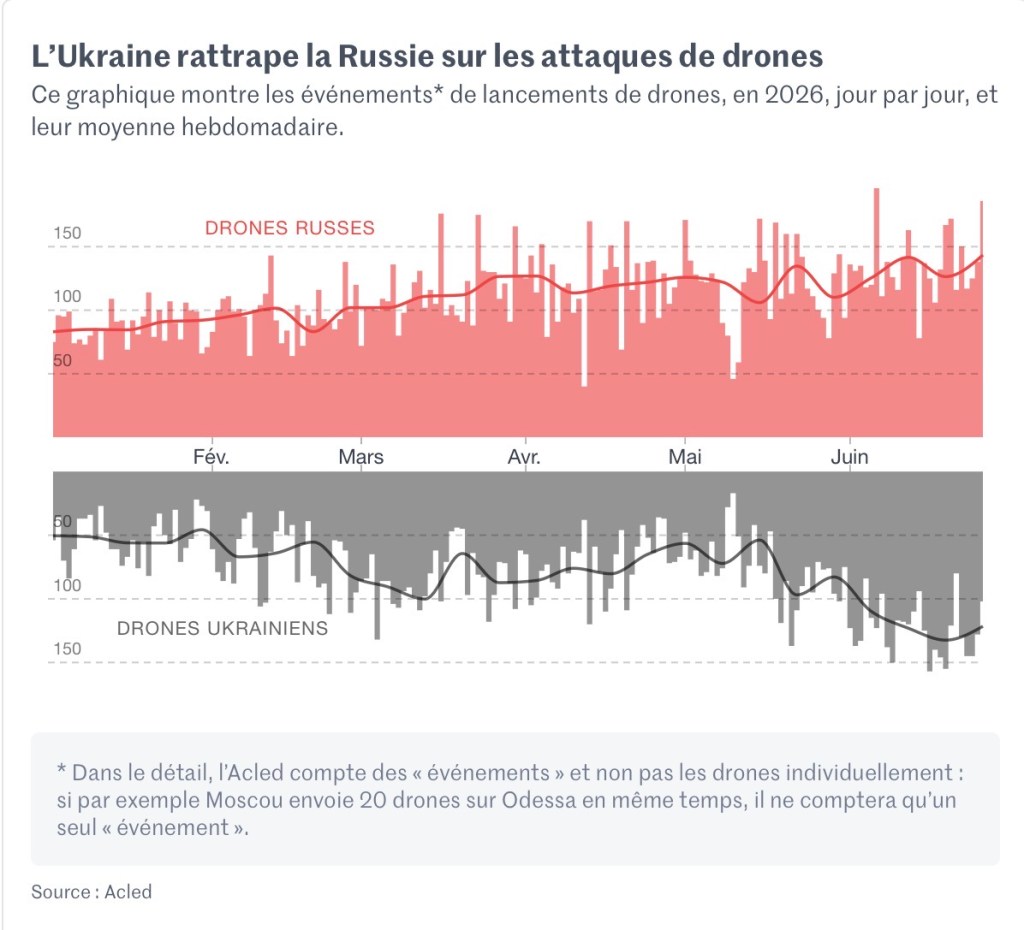
Plus largement encore, la digitalisation de la guerre, – la transformation en données numériques des multiples informations recueillies par d’innombrables réseaux de capteurs –, et l’exploitation de ces données par l’IA (une fois encore) génèrent et développent de nouvelles techniques d’attaque, et donc de nouvelles possibilités de mettre en difficulté la Russie pourtant surpuissante militairement…
Lire aussi : Harcelé par les drones ukrainiens, en difficulté en Crimée, comment Poutine va-t-il réagir ?
Plus grand-chose à voir avec une armée traditionnelle faite de hiérarchie et d’obéissance silencieuseCes innovations révolutionnent la guerre elle-même et la manière de la faire. Pardon d’être caricatural, mais elles ne sont plus le fait de militaires tels qu’ils se concevaient jusqu’alors : masculins, virils et prêts à se sacrifier dans des corps à corps sanglants.
Non, ce sont des jeunes femmes et hommes, dont les armes ne sont clairement pas le métier et qui se battent avec ces nouvelles technologies qu’ils manient comme une évidence, mais dans une manière de faire qui n’a plus grand-chose à voir avec une armée traditionnelle faite de hiérarchie et d’obéissance silencieuse…
Lire aussi : La guerre « à front renversé »
Le général Syrsky, le chef d’état-major qui vient d’être limogé par le président Zelensky, est emblématique de cette armée conventionnelle, formée d’ailleurs à la russe, pour ne pas dire à la soviétique. Il était à la tête d’une organisation pyramidale et obéissante, même si la réalité militaire ukrainienne est plutôt une mosaïque complexe, héritage d’une histoire chaotique et d’affrontements depuis 2014 pas seulement contre les Russes, mais aussi entre des unités territoriales, des commandements spécialisés (comme les services spéciaux ou les drones) et des régiments quasi-autonomes.
C’est aussi cela que Fedorov, le ministre de la défense, voulait faire évoluer pour l’adapter à cette révolution de la guerre qui appelle une transformation complète de « l’appareil militaire », ce qu’il résume en ces termes :
« Aucun autre rôle ne confère l’autorité effective nécessaire pour lutter contre la corruption dans les marchés publics, mener à bien la transformation de l’armée, planifier et mener des opérations asymétriques contre l’ennemi, éradiquer la culture du mensonge et de l’irresponsabilité au sein du système »
Deux approches incompatibles où Zelensky a été forcé d’intervenir
Fedorov représente cette génération moderne qui veut faire la guerre avec ses atouts technologiques et qui goûte peu à la culture de l’ancienneté, du silence, de l’obéissance et de la hiérarchie. Il défiait tout simplement « l’autorité » du général Syrsky, pourtant l’officier le plus âgé dans le grade le plus élevé, ce qui n’est pas vraiment sa référence dans ce monde des réseaux de start-uppers, d’entrepreneurs rapides et en compétition permanente.
Un nouveau monde dans lequel Syrsky fait figure de dinosaure, pas seulement du fait de son âge canonique (le même que le mien, 60 ans) mais surtout pour son incompréhension de cette révolution technologique et culturelle qui rend obsolète l’institution militaire actuelle, celle qu’il commandait.
Des institutions de défense désormais dirigées par des quarantenaires
Le président Zelensky (48 ans) a dû manœuvrer avec habileté pour ne pas froisser la partie la plus conservatrice de l’institution militaire dont Syrsky est emblématique, en particulier lorsque ce dernier est venu lui réclamer de sortir ce jeune ministre de la défense (35 ans) qui déstabilisait l’establishment militaire et ses manières de faire.
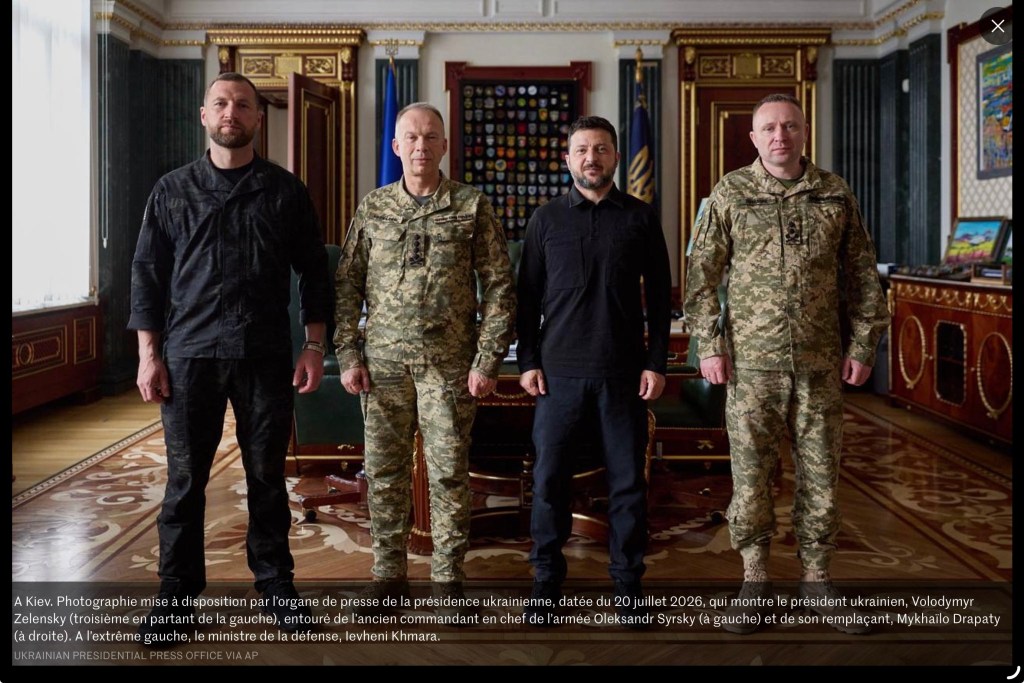
Le président ukrainien a donc limogé Fedorov, provoquant la « levée de boucliers » d’une génération qui n’a pas l’intention d’être envoyée au front comme de la chair à canon. Alors, Zelensky a limogé le général Syrsky dans les jours qui ont suivi pour le remplacer par un profil hybride, le général Drapaty, reconnu par l’institution militaire comme un militaire expérimenté et courageux, mais d’une génération (42 ans) qui rend caduc la domination de l’armée par les plus anciens, ceux-là même qui peinent à comprendre que cette révolution de la guerre appelle aussi une transformation réelle et profonde de l’appareil militaire.
Certains auront noté que les Ukrainiens se sont beaucoup (largement ?) exprimé concernant leur désaccord avec l’éviction de Fedorov le ministre de la défense, d’autant que l’état de guerre reportant sine die la tenue d’élections, il faut aux citoyens ukrainiens trouver d’autres moyens d’exprimer leur opinion. Là encore, cette génération des Modernes utilise avec maîtrise ces réseaux sociaux qui semblent largement relayés sans vraiment pouvoir en mesurer l’audience réelle.
Une victoire incontestable des Modernes qui devrait interroger aussi nos défenses occidentales
En tout état de cause, ce sont ces Modernes qui ont obtenu le départ du général Syrsky quels que soient ses mérites, et son remplacement à la tête des armées (en tant que militaire car le chef des armées reste évidemment le président) par le général Drapaty de 42 ans, une génération plus jeune.
A titre de comparaison, dans nos armées occidentales, un brillant officier avec tous les sacrements (diplômes, brevets et expériences guerrières) ne peut espérer à cet âge être plus qu’un « jeune » colonel qui attendra des années encore pour passer général, et la toute fin de sa carrière pour accéder aux fonctions de chef d’état-major des armées, donc pas avant 55 ans pour préserver « la pyramide des âges » chère à l’institution militaire…
Cela en dit long sur les bouleversements que connaît l’armée ukrainienne confrontée à cette guerre en révolution et qui cherche à transformer un système militaire révolu. Il serait intéressant dès lors d’étendre ce questionnement à nos propres institutions de défense, empreintes de conservatisme et de traditions dans un monde qui se révolutionne sans crier gare ni prévenir. Face à cette révolution de la guerre, quid de nos armées occidentales ?
Lire aussi : Saint-Cyr, à l’école de la Grande Muette
Reprise des négociations par les Etats-Unis ?Dans ce contexte de transformations au pluriel, les négociations avec la Russie de Poutine semblent avoir repris. Elles n’avaient jamais réellement cessé, mais Poutine avait clairement affiché qu’il ne négocierait rien tant qu’il n’obtiendrait pas au moins le Donbass, dont il lui manque toujours près de 5 000 km2.
Lire aussi : Ukraine, la négo de tous les dangers
Il n’y a que Xenia Fedorova, l’amie trop proche de M.Bolloré, pour affirmer avec l’extrême-droite sur Cnews que Poutine veut la paix (et que la liberté d’expression est menacée en France). Ce dernier est surtout très emmerdé par les frappes ukrainiennes en profondeur sur son territoire qui incendient des infrastructures pétrolières, électriques et maintenant marchandes, importantes pour les Russes au quotidien, ces derniers ne comprenant pas ce retour de flammes dû à une opération militaire spéciale qui n’était pas censée durer.
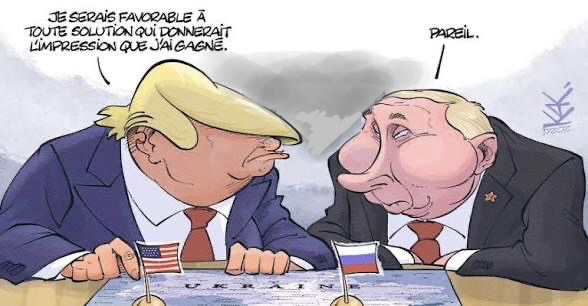
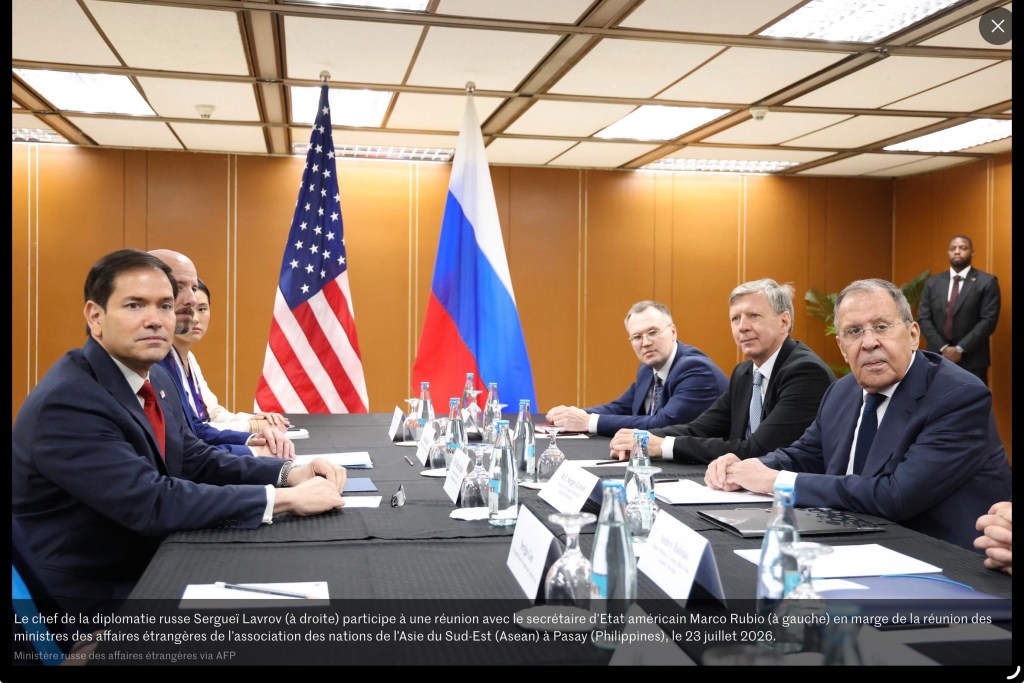
Marco Rubio, le ministre des Affaires étrangères des USA, a donc repris la main pour discuter avec Sergueï Lavrov son homologue russe, et réanimer des discussions que Moscou avait pris soin d’anesthésier. De son côté, le président Zelensky a appelé les négociateurs officiels de Trump, Witkoff et Kushner, mais ces derniers sont empêtrés dans cette affaire du Golfe persique dont la faction la plus dure des Gardiens de la révolution (une autre révolution…) en Iran essaye d’enliser les Etats-Unis.
Une situation intenable à terme pour PoutineImpossible dans ces conditions d’apercevoir une lumière au bout du tunnel, la seule certitude est que cette situation est intenable à terme pour Poutine alors que les Européens font démonstration d’une cohésion inattendue et bienvenue pour soutenir la résistance ukrainienne, avec ou sans les Etats-Unis. Mon regret est que les Européens n’arrivent pas encore à désigner leur représentant spécial pour négocier en leur nom cette sortie de guerre sans se laisser impressionner par ce maître du Kremlin qui ne maîtrise plus rien.
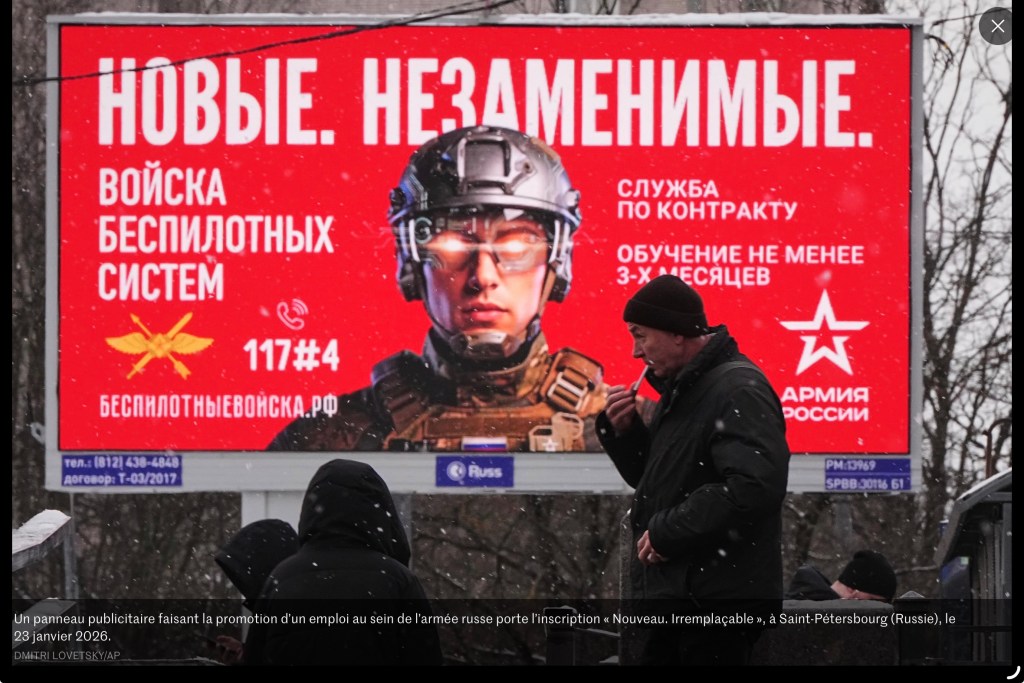 Affiche de propagande russe pour recruter de nouveaux soldats
En Ukraine, Fedorov négocie aussi son retour au gouvernement, marquant ainsi une transformation inéluctable du pouvoir, alors que la Russie semble irrémédiablement enlisée dans un pouvoir que Poutine a lui-même figé…
Lire aussi : 14 juillet, défilé sur les Champs-Élysées et défis aux agresseurs
-
Incendies : comment se protéger des fumées toxiques ?
euwatch.micro.blogDepuis le début de l’été, la France fait face à d’importants feux de forêts. Ceux-ci dégagent des fumées toxiques dont il faut savoir se prémunir.
-
Decision to join W social network
euwatch.micro.blog
Dear Mr Fanta,<div data-sanitized-class="requester"> Response by <a href="https://www.asktheeu.org/body/dg_comm">Communication</a> to <a href="https://www.asktheeu.org/user/alexander_fanta_2">Alexander Fanta</a> on <time datetime="2026-07-24T18:40:46+02:00" title="2026-07-24 18:40:46 +0200">July 24, 2026</time>. </div> <p> <i data-sanitized-class="icon-standalone icon_successful"></i> <strong> Successful </strong> </p>Please find attached DG COMM’s reply to your request for access to Commission documents registered under the above case number 2026/3…
-
Visualisez l’étendue des incendies en France, en carte et graphiques
euwatch.micro.blogLe début de l’été est marqué, en France hexagonale, par une sécheresse importante et des départs de feu dont le nombre est bien supérieur à la moyenne.
-
Hungary launches probe into controversial €1 billion loan to North Macedonia
euwatch.micro.blogHungary’s new government is intensifying its scrutiny of a major financial deal struck by the previous administration, shining a spotlight on a €1 billion loan extended to North Macedonia under unusually generous terms.
Prime Minister Péter Magyar announced a sweeping investigation into the transaction, which was facilitated through the state-owned Hungarian Export-Import Bank (Eximbank). The move forms part of a broader effort to examine potential mismanagement of public funds during Viktor Orbán’s long tenure.
The loan, granted at a fixed interest rate of just 3.25 percent with a full 100 percent Hungarian state guarantee, has raised eyebrows due to its favorable conditions compared to domestic borrowing rates. Magyar highlighted that Hungarian companies, citizens, and even the state itself typically face significantly higher interest rates on loans, including for major infrastructure projects like the Paks nuclear power plant expansion. This discrepancy has fueled suspicions that funds intended to bolster Hungarian exporters were instead redirected to support foreign political allies and associated business interests.
According to the Prime Minister, the arrangement may represent a misuse of public resources. “There are suspicions that the previous government used public funds intended for Hungarian business to support foreign policy allies and friendly trade structures,” Magyar stated. The investigation, referred to police by the Ministry of Economy and Energy, examines possible abuse of office, mismanagement, and financial crimes. This case is one of four major Eximbank transactions now under review, collectively involving financing worth over €2.7 billion.
Eximbank under the microscope: multiple high-risk deals qestioned
The North Macedonia loan is not an isolated incident. Hungarian authorities have filed criminal complaints regarding several other substantial Eximbank operations that share common red flags: high financial exposure, elevated risk classifications, and what officials describe as insufficient safeguards or collateral.
One case involves a €162 million loan approved in June 2025 for redeveloping Budapest’s former Sofitel Chain Bridge hotel and adjacent buildings. The project reportedly received a high-risk rating, yet the bank’s board had only two days to review a lengthy proposal before granting approval, with several internal requirements waived. Media reports have linked the investment to business circles close to Orbán’s family.
Another transaction concerns €346 million in bond financing for a major infrastructure project in Africa, led by Hungarian firm Duna Aszfalt. The funds supported the construction of a 184-kilometer motorway, a border bridge, and related facilities connecting Zambia and the Democratic Republic of the Congo. Despite both African nations carrying Eximbank’s highest risk rating, the Hungarian state backed 80 percent of the financing. Authorities are now assessing whether such generous support was justified given the evident country, legal, and project risks.
A third case centers on a massive €1.58 billion loan to Egyptian National Railways for the purchase of Hungarian-manufactured railway carriages. The deal, originally involving Russian partners, faced major disruptions following sanctions related to the war in Ukraine. Delays mounted, with hundreds of carriages undelivered by the contractual deadline, and the associated Hungarian companies entered liquidation. The state now bears the risk of non-performance, prompting questions about oversight and potential irregularities, including large dividend payouts prior to bankruptcy.
These investigations underscore deeper concerns about Eximbank’s operations. Originally established to support Hungarian exporters, the bank’s asset base had grown substantially to around €10.9 billion by the end of 2024. Critics argue it increasingly functioned more like a private financing vehicle for politically connected interests than a tool for genuine economic diplomacy.
Anti-corruption reforms and fiscal discipline
The loan controversy emerges against a backdrop of ambitious reforms by Magyar’s Tisza government, which assumed power following elections in 2026. Magyar has positioned the investigations as part of a commitment to transparency and accountability, emphasizing that the government seeks facts rather than premature judgments. “We will provide every necessary assistance to determine whether crimes were committed and where the taxpayers’ money is,” he affirmed.
In parallel with the financial probes, the government is advancing institutional changes. A bill to establish an independent anti-corruption office has been submitted, and Hungary is taking steps toward joining the European Public Prosecutor’s Office. Broader fiscal tightening measures include slashing parliamentary expenses, reducing the size and remuneration of boards at state-owned companies, and capping salaries for top executives. Magyar, who earns significantly less than his predecessor, highlighted these moves as essential to curbing what he described as “payment outlets” for political loyalists under the prior regime.
The North Macedonia loan itself traces back to diplomatic overtures in 2024. The initial agreement was signed in Washington during the NATO Summit shortly after Hristijan Mickoski’s government took office in Skopje. Subsequent parliamentary approvals followed, with the first €500 million tranche disbursed in October 2024. Investigative reporting has suggested the funds originated from a larger €1 billion borrowing by Hungary from China earlier that year, raising questions about indirect Chinese geopolitical influence in the Balkans via Hungarian intermediaries.
Magyar’s government inherited what it calls a “catastrophic” budgetary situation. By pursuing these cases vigorously while implementing spending cuts, the new leadership aims to signal a decisive break from past practices. The Prime Minister has stressed the importance of European cooperation, including on extradition matters, and criticized previous decisions granting asylum to certain foreign politicians facing legal troubles.
For many Hungarians, the probe into the North Macedonia deal represents more than a financial review – it symbolizes a broader reckoning with opaque decision-making that allegedly prioritized political alliances over national economic interests.
Sources: Budapest Times, Daily News Hungary, BGNES, Vijesti
Caption: A handout photo made available by the Hungarian Prime Minister’s Office General Department of Communication shows Hungarian Prime Minister Viktor Orban (R) shaking hands with North Macedonia’s Prime Minister Hristijan Mickoski at his office in Budapest, Hungary, 30 May 2025. EPA/ZOLTAN FISCHER
-
Spain coach slams Argentina's World Cup final behaviour as 'unacceptable’
euwatch.micro.blogArgentina’s antics following the final whistle in the World Cup final have prompted FIFA to launch a disciplinary investigation.
-
Ireland pushes for breakthrough on EU capital markets reform
euwatch.micro.blogAlso in this newsletter: Trump reshapes Iceland’s EU referendum
