Timeline
Every post and feed across this instance
-
“No CGI” Is Really Just Invisible CGI
Mission Impossible. Oppenheimer. F1. The Odyssey. Top Gun: Maverick. Mad Max: Fury Road. Inception. Dune. Filmmakers and studios who make movies like these love to emphasize their heavy use of practical effects, i.e. real cars jumping real bridges or real people hanging off of real airplanes. “No CGI”, they say, despite the hundreds of names in the visual effects section of the films’ credits.
In his six-part series, Jonas Ussing, who co-owns a visual effects studio in Denmark, takes a look at these “No CGI” films and shows us just how much digital graphical effects goes into them. For instance, did you know that every single flying jet in Top Gun: Maverick, a movie we were assured was all practical effects, was built with CGI? Take a look:
His latest video is all about Christopher Nolan:
I’ve only watched bits and pieces of these videos so far (the Nolan one is 71 minutes long), but when ILM’s Todd Vaziri says something film-related is good, it’s good.
Tags: cgi · film school · Jonas Ussing · movies · video
-
Speaking of RSS feeds, you periodically go through all of the feeds in your aggregator and see if they are broken, right? And if they are, you update the URLs or just unsubscribe from them, I assume. And if you know what's wrong with an RSS feed (sudden absence, malformed, URL has changed), you contact the author or the publication. And if that doesn't work, you create an RSS feed out of the site using tools like Huginn or NewsBlur (one of its paid tiers has a feature to turn any website into an RSS feed). wouldn't say I've gone as far as Chris Hardie, but I've done a lot of those things.
-
RSS.chat -- I don't have enough places to fit all the ideas these days. But we have been digging and the pieces fit together pretty well.
-
RSS is still RSS, picking up where we left off
A lot of people are confused about wtf this is.
I don't blame them. I put out there a partially implemented vision.
But the vision isn't really new -- it's a turnback to 2002, and what UserLand would have done if we had continued pushing, which we did not.
At the time we had a product named Radio UserLand that was an integrated writing and reading platform, very user friendly, and it worked, all done with RSS. It also did podcasting if you can believe that.
So here we are 24 years later. RSS is still RSS. And we still have feed readers and blogging tools, so how does this become a social network?
http://scripting.com/2026/07/21/134309.html
That's where it's at right now. This is the writing environment. I have yet to show a new reading environment, but that's okay you can use NetNewsWire! It works. I didn't even tell Brent this was coming. Why is that? Because we use standards.
I don't have enough places to fit all the ideas these days. But we have been digging and the pieces seem to fit together just right
-
The official trailer for Avengers: Doomsday . They’ve...
The official trailer for Avengers: Doomsday. They’ve gotten (some of) the band back together — perhaps this will be a return to form for Marvel?
-
Well, well. This is exciting
-
Three-part ecosystem
 There are three parts to the rss.chat ecosystem.
- Writing. Today's rss.chat product is a group writing system, designed for a school department, a team of developers, a family, a magazine or group blog, or just as well, a single author. I don't think it would work well with 1000 users, because it doesn't implement the concept of "follow." And imho it's important that the people are colleagues, family or friends, people invested in real world relationships with each other, so they don't drop a turd in the conversation and just expect to walk away. I've found that dynamic works most of the time. But important point -- all kinds of writing tools can exist. Any social app can to be part of this, all they'd have to do is support inbound and outbound RSS and textcasting. Small pieces loosely joined and every part replaceable. And we do it with the web, we don't try to invent a new web. I will keep beating that drum because it's the difference between using twenty editors or one. As a writer I know that one is the best, with choice among 20 editors, because maybe somedays I feel like writing in a different editor. To make the web a real writing environment, you have to think like a writer. ;-)
- Reading. This can be as simple as a current-day reader like Feedly or NetNewsWire, or more, using the new features in RSS.chat feeds.
- The unknown: We're allocating in our minds (Claude and I) room for a fair number of unforeseen products created by independent software devs in the cracks between reading and writing, and in a larger world (search, navigating through structures, etc. We have really good thread support baked into the protocol. And a bit of docs about how the pieces fit together.
I'm thinking in these terms because I'm starting to work on how my reader will work. I have some ideas, not sure when I'll be ready to write about them. And to be clear there will be no requirement that you use our writing tool to use our reader or vice versa.
Every part replaceable.
-
A Fireside Chat with Cat and Thariq from the Claude Code team
Earlier this month I hosted a fireside chat session at the AI Engineer World's Fair with Cat Wu and Thariq Shihipar from Anthropic's Claude Code team. We talked about Claude Code, Claude Tag, Fable, coding agent security, evals, tool design, and how Anthropic use these tools themselves.
The full video of the session is now available on YouTube. Below is an edited copy of the transcript, with extra links and my own bolded highlights.
A few top-level notes if you don't want to watch the video or wade through the whole transcript:
- Claude Tag (Claude's new collaborative Slack integration) now lands 65% of the product engineering PRs for the Claude Code team.
- Claude Code ships features to Anthropic employees first, and only ships the features that demonstrate user retention with that cohort
- Critical changes to Claude Code are still reviewed manually, but the team increasingly relies on automated code review for the "outer layers" of the product.
- Adding examples to a system prompt is no longer best practice for models like Fable 5 or even Opus 4.8. The Claude Code system prompt recently reduced in size by 80%.
- Likewise, lists of "don't do X and don't do Y" can reduce the quality of results from the latest models.
- Dogfooding inside Anthropic is called "ant fooding".
- Anthropic really believe in their auto mode, and see that as an enabling technology for Claude Tag.
- Thariq advises offsetting coding-agent-induced Deep Blue by "being more ambitious" with the work you take on.
- Fable is competent at editing video, and Thariq used it to edit its own launch video.
- Anthropic's culture of working (internally) in public is key to their success, as demonstrated by the way they use Claude Tag in their public Slack Channels.
How has what you do day-to-day changed in the past year?
Simon: Claude Code came out in February of last year — it's under a year and a half old, and it was originally just a bullet point on the Claude Sonnet 3.7 launch. How has what you do on a day-to-day basis changed in the past year, now that we have these coding agents that actually work for us?
Cat: I remember when we first came out with Claude Code and Sonnet 3.7, you would give it a task and you would have to closely monitor every single little thing it tried to do. I would read every permission prompt extremely carefully. I would frequently say no — no, no, no, did you check this file? Did you check that file? And now it's been incredible with every model generation. I feel like we've all gotten a chance to take a step back and delegate a lot more of the menial implementation to Claude. It's freed up a lot of our time to think about more creative work, like: what is the right experience that we should be providing to our users, now that we know Claude Code can implement a lot of it? And now with Fable it's a totally different step change improvement. We see for a lot of our use cases that you can actually one-shot a ton of features with Fable now.
Thariq: I remember the first text I got about Claude Code. One of my best friends was like, "You need to go try Claude Code." It was about when Opus 4 came out, and I tried it and I was like, "Oh, shit. I need to work at Anthropic now." And that was Opus 4 — great model, but you were reading permission prompts. It's kind of crazy how much amnesia we have, where I'm like, oh, auto mode has always been here, right? I don't even remember pressing yes and allow. For me, the big thing I'm trying to push myself on is that we have to do higher quality work than we've ever done before. The outputs are incredibly high quality. I've been using it to edit videos a bunch, and I'm like, okay, it has to meet the very exacting demands of our brand team in a couple of hours or we just can't do it. That's how I'm trying to shift with Fable: the best work we've ever done, faster than we've ever done it before.
What piece of conventional software engineering no longer holds?
Simon: What's a piece of conventional software engineering that was true a year ago that you don't think holds anymore in this new world?
Cat: One of the biggest shifts we're seeing in the eng skill set: two years ago it was pretty typical for a product manager to go talk to a bunch of customers, align over the course of six months with cross-functional teams on some PRD, and write a thorough spec on exactly how we'll implement this before the first line of code gets written. Now things are completely turned the opposite way. For a lot of engineers, the push I would give to folks in the room is to develop more of your business sense and product sense on what it is we should build, because the timeline between having an idea and building it is so much shorter — it's down from six to twelve months to maybe even a week. That means all of us need to have better taste on what is worth building, what will actually inflect the businesses we're working on. So it's an increase in value on product taste and business sense, and a bit lower on execution in most product domains. Of course, for infra there's still a very heavy emphasis on making sure all the details are right.
Thariq: For me, it's that rewrites are now good.
Simon: The worst thing you could do is now actually fine!
Thariq: Exactly. All the Mythical Man-Month stuff — never rewrite — I'm pro-rewriting now. If you have a good test suite — and I think the rewrite actually forces you to make sure you have a good test suite — but I think what people undercount is that a codebase is a spec, and maybe it's the only copy of the spec that you have, because no one knows every branching part of the codebase. You can take this as an artifact and distill it or create other versions of it. We rewrote Bun in Rust and it works great — it's live for me right now.
Simon: You're not shipping Claude Code on Bun-in-Rust yet, right?
Thariq: Internally we have.
(Actually it looks like Anthropic started shipping Claude Code on Bun-in-Rust to everyone on June 17th.)
What kind of things are non-engineers doing with Claude Tag?
Simon: The other big launch recently was Claude Tag — that's what, a week old now, at least for the rest of us. I understand it's being used at Anthropic by non-engineers a great deal. What kind of things are non-engineers doing with Claude Tag?
Cat: Claude Tag is a Claude that lives in your team's collaboration tools. We launched it last week within Slack. The thing that's different about Claude Tag is it's multiplayer by default. Once you add Claude Tag to a Slack channel, you can chime in, your teammates can chime in, and you can collaborate together on the PR. The other big difference is that it's proactive instead of reactive. You can tell Claude Tag, "Hey, monitor every bug report in this channel, put up a PR to fix it, and tag the engineer who last touched this part of the codebase," and it'll do it for the lifetime of the channel without you having to manually tag it in. And the third big shift is that we've added team memory into this. If you tell Claude Tag your preferences in the channel, it'll remember them for every future post. If you always want it to debug outages but you don't want it to debug warnings, just tell it that in natural language in the channel and it'll remember it for you and everyone else on your team.
Internally, we see Claude Tag as the evolution of Claude Code. We see this as a large shift in how we work internally. Claude Tag currently lands 65% of our product eng PRs.
Simon: For all of Anthropic, or just for Claude Code?
Cat: This is just for our product engineering team — our internal version of Claude Tag lands 65% of our product PRs right now. And this is a huge shift; this is more than 50% of our PRs. The way we see people split work between Claude Code and Claude Tag is: Claude Code is still the best place for your most complex tasks, when you're interactively iterating with the agent. But Claude Tag is great for having it work proactively on your behalf, so you no longer need to manually kick off Claude Code for all the bug reports that come up for features you're working on.
Thariq: And for non-coding cases: for example, before this talk we asked Claude Tag, "Hey, when is Fable releasing?" We wanted to make sure we'd line it up with the announcement. Claude Tag would search our Slack and look at who's been saying what. As a search engine for your company, it's really valuable. It has all the context for your product, so you can ask it metrics-related questions — often when you're making decisions you want them informed by what the metrics say, so you hook it up to your event store. I've seen our marketing team do things like, "Hey, tell me about this feature." They're not programmers, but Claude is a programmer — it can clone the codebase and say, "This is the feature, this is what it looks like, this is a recording of me using the feature." It enables a whole wide variety of things, and I think we're still early in figuring that out.
Claude Tag as the team collaborative layer
Simon: One of the problems I've had with coding agents is that I get how to use them as an individual, but I'm not really clear on how to use them in a team environment. It sounds like Claude Tag is your current answer to that team collaborative layer for this stuff.
Cat: Exactly. And a large percentage of our sessions are actually multiplayer right now. Maybe I say, "Hey, I think we should implement this new feature in Cowork," and I'll tag in Claude Tag to do a first pass at it. Then I'll tell Claude Tag, "Share a recording of your final implementation," and I'll tag in design to take a look. They'll nudge it, then pass it on to eng to take it to the finish line and get it out to prod. It's been this very fluid experience. We're still trying to iron out what the social dynamics are for steering the same session, but we've found that people just observe how others use it and follow those social norms — it's been pretty intuitive for us to integrate Claude Tag into our teams.
Thariq: It's great for teaching people, and also for reducing slop, because the fact that everyone is seeing you use Claude together sort of levels up how you use Claude as well.
This reminded me of how Midjourney solved the challenge of teaching people advanced image prompting by enforcing prompting in public in their Discord channels.
How do you decide which features are worth building when building is so much cheaper?
Something I've found really hard myself is knowing when a feature is worth shipping now that the cost of actually building features has dropped so much.
Simon: How do you deal with the hardest problem in all of engineering — prioritization? How do you decide which features are worth building and shipping when building a feature is so much more inexpensive now?
Cat: This is the hard thing. There are a few ways we approach it. One is we dogfood our products every single day. Whenever there's something we want to be able to do in our products that we're not able to, instead of finding a different solution we fix our product so it can support that case. We have a very heavy dogfooding culture internally. Before we share our products with everyone in the world, we share them with everyone within Anthropic, and with some early customers who give us very honest feedback about it — the more brutal the better — and we iterate until people love it. We have an internal bar for the number of active users and the amount of retention a feature has to have before we share it with the world. Because this bar is very clear, every engineer knows what they're trying to hit. I think this also levels up our polish, because if the feature isn't polished, people will churn — and then we shouldn't ship that feature.
Using internal user-retention to decide if a feature should ship makes a whole lot of sense to me.
Do you have an example of a feature which surprised you?
Simon: Do you have an example of a feature which surprised you? You rolled it out and the engagement was off the charts — something unlikely to be shipped that turned into a real product thing.
Cat: I do have one. A lot of folks on our team love remote control. Remote control lets you use your mobile device, or Claude in the web browser, to connect to a local Claude Code session running in your CLI. I never have this need, because I just kick off the task directly on mobile and it runs in a cloud session without using my local environment — I think because I'm doing very easy coding tasks. It was something I didn't totally understand; I was like, hey, people should just set up remote dev environments. But in practice, once we rolled out remote control, so many people I talk to told me that what they do every night is plug their laptop into a power charger, open a bunch of remote control sessions, lock the screen, and then use their mobile phone from their couch to control Claude Code. So this has become a flow we're now leaning into that I didn't originally get — but now I do.
Does a human review every line of production code in Claude Code?
One of the over-arching themes of the conference was review: how much attention to people spend to reviewing code written for them by coding agents. I was very keen to hear the Claude Code team's take on this!
Simon: How does code review work? Does a human being review every line of production code that makes it into Claude Code? And if not, what are you doing — how do you keep the quality up?
Thariq: It varies on the task a lot. For important areas we have code owners. The system prompt is an example where we have a code owner — you really need to get their approval.
Simon: So the code owner is directly responsible for the quality of that area of the code.
Thariq: That's right.
Cat: And they need to approve any PR that touches it.
Thariq: We have our code review GitHub bot review everything — that goes on every PR, and often it's doing the bulk of the review. Something I've seen on the team is that for more complex PRs you might make an artifact to explain the PR so that other people can then review. And we invest a lot into verification, CI/CD, things like that, to make sure that any time anything fails we have a test. We have a really robust environment where Claude can control Claude Code and test it. So there's a multi-pronged approach to code review.
Cat: In general, we are trying to move to a world where humans don't need to be in the loop. For the most critical changes to the core of Claude Code, and the cores of other products, there is always a code owner and they do manually review all the changes. But increasingly, for the changes at the outer layers, we actually have Claude code review fully review those. That sounds pretty scary, but we've had a six-plus-month-long process to get here, and there are baby steps that you take to build up trust with code review. In the beginning we had human review for everything, and then increasingly we would say, okay, for code changes that touch these files, code review is catching 100% of the issues there — so we actually don't need a human manually reviewing those. And when we have incident review, we look at the PRs that caused the incident and say, okay, how do we update code review to catch that? — and we take those PRs and add them to an eval set to make sure our future changes to code review never regress that metric. Removing humans from the code review loop is a big step forward. It can sound scary, and it's not something you can do overnight, but it is something you can do through many months of investment in the infrastructure to give you the confidence that code review is catching everything you care about.
So the key seems to be constantly iterating on the automated review systems themselves, in order to build trust in them over time.
How does a new model affect your intuition for what it can and can't do?
We got deep into evals - another hot topic throughout the wider conference.
Simon: I know that Opus 4.8, if I ask it to build me a JSON endpoint that runs a SQL query and outputs JSON, is just going to get it right — that's not something I have to review closely. But then a new model comes along and I don't know how to build trust in Fable quickly, that it's not going to mess things up that Opus didn't. How does the new model affect your intuition for what it can do and what it can't do?
Cat: The main reason we're building up this eval base over time is so that new models can be a drop-in replacement. When we have a new model, we run the whole eval set and make sure that, for example, Fable is strictly better than Opus 4.8 — and that gives us the confidence to drop it in.
Simon: Are those model evals for Anthropic as a whole, or Claude Code team-specific?
Cat: We have both. We have evals on our team, and we run code review across every repo within Anthropic, so we have evals for that. And for things like auto mode, we not only have evals across every user within Anthropic — we've also commissioned multiple external testers to red team it, to create environments with prompt injections and malicious inputs, and make sure that auto mode doesn't let any of those pass.
How do you build confidence that a system prompt tweak results in better output?
Simon: I want to know if the system prompt improvement I made actually improved the product — that's the most basic form of product-specific eval, and I still don't have a great feel for how to do that. Is that something you're doing such that you have complete confidence that a tweak you've made to the system prompt results in better output?
Cat: We don't have complete confidence, but we do a lot to make sure that we don't regress performance. The starting point is a suite of external evals that we trust, and we complement that with an even larger suite of internal evals that we trust. To start, we mainly optimize for capability: given a complete definition of a task and the full codebase, does Claude make the right decisions, fully fix the bugs, and pass all the tests? That's the starting point and the thing we optimize for, because it's most directly what users want. But there are a lot of behaviors that impact how users feel when they work with Claude Code. For example, people really don't like it when Claude Code says it's time to go to sleep. Or people really don't like it when it says, "Hey, I finished two out of five parts — do you want me to continue?" Yes, please continue. So we're building up a set of behavioral evals to catch these. And as we get user feedback — please be loud with us about your user feedback — we rank the priority issues and go down one by one and build evals for each of them. It's not 100% coverage, but it is a priority for us to increase the coverage.
How much interaction is there between the Claude Code team and the model training teams?
Simon: How much interaction is there between the Claude Code team and the teams at Anthropic who are training the models in the first place? Is that quite a close collaboration?
Cat: Across Anthropic, we all work quite closely together. We meet often to talk about what we expect the next generation of models to be able to do. Our research team has also been amazing about showing this publicly — we often talk in our blog posts about how we're targeting ever-increasing longer-horizon work, and how we train Claude itself to be honest, harmless, and helpful. We also put a lot of effort into making sure it's aligned with your intent, even if your intent is expressed in a fuzzy way. Of course, try your best to be specific about what you want, so Claude has all the context — but even when you're not specific, we teach Claude to make good assumptions. It's been a productive partnership.
The system prompt has been reduced by 80% — what have you been able to drop?
So many useful prompting tips in this section!
Simon: Thariq, you mentioned this morning that the system prompt for Claude Code has been reduced by 80% because of Claude Fable. Can you go into a little more detail? What kind of things have you been able to drop?
Thariq: It wasn't just Fable — it was Opus 4.8 as well, and going forward, future models. We have different system prompts for different models now. One of the patterns we saw is that we were over-constraining Claude. The initial, maybe Opus 4-ish models wanted a lot of examples, and removing examples was extremely helpful, because it was just more creative than the examples we gave it.
Simon: That's really interesting, because one of the top prompting tips I give people is: give it examples. If that's no longer true, that kind of breaks my prompting model a little bit.
Thariq: Same here — I was surprised to hear that. I think now it's more about the shape of what you give it — the tools you give to Claude, your system prompt, things like that. The other thing we did is try to give it more context and fewer "do not do this" instructions, because that's a very strong impulse for Claude, and especially if it conflicts with user instructions later on, that can be extremely confusing to Claude — "I've got this skill that says this and the system prompt says this." So we try to have fewer hard constraints, more context, and fewer instructions overall. It's definitely a science — it took a bunch of evals to build.
Cat: In general, when you're prompting these models, you should always think: are there edge cases to the instruction that I'm giving it? When we went back and reviewed all the instructions in the Claude Code system prompt, we found a few cases where yes, this statement is 90% true, but there's a real 10% of cases where it's not true. We didn't want to constrain the model, or confuse it into thinking it should always do this. One good example is verification. Everyone here wants Claude to verify its work, and we had some instructions in the prompt that said: if you make a front-end change, always verify. But there's a limit to it. If it's changing copy from one string to another string, and the user says "just make a quick fix and update the test," maybe you don't want to verify. So we've adjusted our wording from "always verify, verify, verify" to something like: most of the time when you're doing front-end work you can't fully understand the experience by hitting the backend endpoints, so when you make larger changes to the user experience, please run the app locally. And in fact, that instruction probably isn't even good either, because what is a large change? Maybe it should test small changes too. In general, whenever you give a prompt to the model, you should think about the ways in which it could be misinterpreted by a well-intentioned human, in order to better understand how the model might interpret it — and soften the prompt so that it's actually 100% accurate, because you're giving this prompt to the model 100% of the time.
Simon: What's fascinating about that is you're relying on the model's judgment — and that's got to be an Opus/Fable-level thing. Models a year ago did not have the level of judgment necessary to decide whether they were going to test a change or not. But that does break down if you're building for a wide range of models and trying to run the cheaper models for cheaper tasks.
Cat: We actually have a different system prompt per model now, for this very reason. It's only our most frontier models that have this 80% token decrease — the older models still have the full system prompt.
Simon: Do you think Fable and Opus are smart enough to prompt Haiku with more details, because they understand that Haiku has less judgment, less taste?
Cat: We haven't been able to eval it — we don't have any hard data to show it.
Thariq: There's a tough thing with smaller models sometimes, because sometimes the larger models can be more token-efficient on a hard problem than the smaller models. So there's a bit of intuition to build there — sometimes you really just want frontier intelligence almost all the time. The Pareto curve shifts, and it's hard to find.
Simon: A year ago I did not trust a model to write a prompt. Today the good models are very good at prompting — a lot of my prompts are written by models, which feels absurd but works really well. What helped me come to terms with that was thinking about subagents, which are entirely about a Claude model setting up a prompt for another Claude model.
Thariq: Workflows are actually a really good example of this, because it's Claude not just prompting a single subagent, but prompting the orchestration of many subagents, and each one of them gets a very detailed prompt. It's almost a level above just spawning a subagent. I've also been using it on my personal machine, giving it the Gemini API and saying: here, generate images. It's way less lazy than I am at prompting an image model. It's just Claude prompting Claude all the way down.
Cat: I think Claude also wrote the prompt for the workflow tool.
Simon: I've read that prompt — it's a good prompt. That's actually a frustration I have with Anthropic generally: you publish the prompts for Claude Chat, but you don't include the tool prompts and the Claude Code prompts. I still have to run a proxy to intercept them. I would love it if the Claude Code prompts were deliberately published — they're the documentation. They're how you know what the tool can do and how it works.
Cat: I'll write down that feature request. I'll have Claude Tag do it.
Interesting to note that OpenAI's prompting best practices for GPT-5.6 includes similar advice for their latest models:
Favor leaner prompts
Removing repeated instructions and examples and simplifying tool descriptions can improve task performance and token efficiency. In a sample of internal coding-agent eval runs, configurations with leaner system prompts improved evaluation scores by roughly 10–15% while reducing total tokens by 41–66% and cost by 33–67%.
What's your bar for introducing a new tool?
Simon: Claude Code is basically a big bag of tools. What's your bar for introducing a new tool? How do you decide when it's worth doing that additional engineering at that level?
Cat: Do you want to take it? You introduced one of the best tools we have.
Thariq: My career peaked when I introduced the ask user question tool. It's really hard. Especially for some tools — ask user question is Claude's tool to ask you — so it's hard to eval, and sometimes it's more of a user preference thing. Back then we had fewer evals, so it was very dogfooding based — or "ant fooding," our ant version of that. But overall we've been trying to trend towards fewer tools. The last set of tools we introduced was the task tool, I think — and we try to give Claude more general versions to do things.
What's the latest evolution of your file editing tool?
I have a long-running fascination with file editing tools - they were the subject of the old Aider code editing leaderboard, and I've watched with interest as they've evolved in different coding agents from search-and-replace based to line-number-based to more complicated patterns.
The Claude API docs describe a text editing tool that's recommended for building against the API, but Claude Code seems to use slightly different approaches here.
Simon: One of the most interesting tools is the file editing tool — you can have file editing as a tool, or you can tell it to use sed and grep and do things that way. What's the latest evolution of your file editing tool?
Thariq: We still have one, but for example we removed our grep and other search tools — glob tools — in favor of native bash. Like I said in my talk earlier, the models are kind of more of a biology than a physics, and tool design especially is quite hard. I'm not sure if Cat disagrees and thinks there's a science to the eval of it, but I think tool design is more of an art, maybe — or a biology.
Cat: I largely agree, but in general as we introduce more tools, we try to keep the cardinality pretty low and make sure that every tool we add has a distinct function from every other tool, so that Claude can very easily distinguish when to call each. For file edit, the reason we have it is actually because we can render it. We show people when Claude makes a file change, and there's this nice dedicated UI that says: do you approve this edit to this file? The reason we had a dedicated file edit tool was so that we could deterministically know that Claude was making a file change, so we could show people this nice UI. A lot of new users onboarding still really like this experience, so we've kept it around. But for a lot of us who are on auto mode right now — hopefully you're not on YOLO mode — I don't think it actually matters, and we could probably just remove file edit and be totally fine.
What's the advice within Anthropic for safely running Claude Code?
It's the prompt injection question! Who better than Anthropic employees to explain how Anthropic sees the risk of prompt injection attacks causing their Claude Code instances to run amok?
It turns out they really trust their auto mode - and see that as the feature that enabled Claude Tag.
Simon: Let's talk about safety and security. I am deeply aware of the risks of prompt injection, and there are so many bad things that can happen if somebody else tells my Claude Code what to do. I still mostly run Claude Code in YOLO mode and feel incredibly guilty about it. What's the advice within Anthropic for safely running Claude Code?
Cat: Why not auto mode?
Simon: I am starting to use auto mode, but I don't understand it enough to get how safe it is. As of maybe three weeks ago, I'm defaulting to auto mode.
Cat: Broadly within Anthropic, almost every single person uses auto mode. It is the best way to do long-running work in Claude Code while being safe. We've done extensive bashing. We have thousands of evals. We've commissioned many red teamers to create adversarial environments in order to trick Claude Code into doing bad actions, and we've mitigated every single issue that they found. We're going to publish some evals in the coming weeks, but we've pretty much mitigated every attack.
Simon: That is a big claim.
Cat: We'll share the evals for it so folks can assess, but we've been extremely diligent about identifying all the ways in which Claude might mess up and then updating auto mode to counter it. It doesn't catch 100% of things — that would be way too strong a claim. But for the main categories of risks that we're concerned about, like prompt injection and data exfiltration, the risks are far lower than the average human reviewer.
I am very much looking forward to learning more about their evals and approach to verifying auto mode.
Thariq: A little on how auto mode works — it's useful to build this mental model. Whenever Claude is doing a turn, or a bash call, there's a Sonnet classifier that is judging the tool call and also the context of the conversation — your instruction. There are some things around permissions that are dependent on your request: you don't want to give git push permissions all the time, but if you say "push this to GitHub," you want it to do it — and if you say "don't push," you want it to deny it. Auto mode will do that. That particular thing happens to me a lot, where Claude tried to do something because it's very helpful and proactive, and auto mode saw "don't do this" and surfaced it. So it's good at the dynamic permissions that you yourself give inside the prompt, which I think is really important. It also works well with our sandboxing infrastructure, because sandboxing is one of those things where there are so many different edge cases that it's hard for us to deterministically follow them. We have a sandbox, and when something needs to escape the sandbox — like a network request — auto mode can look at that request and ask: does this make sense? — and allow it.
Simon: I hadn't realized auto mode is interacting with the networking sandbox as well.
Cat: It interacts with any permission prompt the user would otherwise see.
Simon: How old is auto mode? As a feature I had access to, it's only a couple of months old, right?
(It was first made available to the public on March 24th.)
Cat: We've been using it within Anthropic since January, so we've been hardening it for quite a while. Anthropic is extremely focused on safety and security, and we've been working broadly across our alignment and safeguards teams to enable the rollout internally, build out these evals, and make auto mode even more robust before sharing it with the world.
Thariq: This is also the reason Claude Tag is so good — Claude Tag uses auto mode. I've heard a lot of build-versus-buy questions about a Slackbot, and I'm like: please, you probably shouldn't build your own AI Slackbot. There are so many attack vectors. You have a feedback channel that users can post feedback into, and now your bot is reading it. The work we've put in with auto mode — and we have a general Swiss cheese defense for security; we also RL against this stuff — I think this is really what makes Claude Tag work. It works seamlessly with your permissions, and you don't want to be prompt injected in your Slack.
Are there more security things in the pipeline beyond auto mode?
Simon: Are there any more security things in the pipeline that go beyond auto mode?
Thariq: I think we're very secure. With Claude Tag you can provision your own credentials for Claude, so it doesn't need to act on your behalf — you can have Claude as an identity, and that also makes it easier to audit and inspect what Claude is doing.
Simon: Because Claude Tag is influenced by anyone who can talk to it — it's got a much wider pool of people telling it what to do.
Thariq: That's right. And of course we have probes as well with Fable, which is a downstream effect of our safety and research work. I think this is the moment where you see Anthropic being an AI safety company really paying off: we really want Claude to be able to run in an aligned way over long periods of time, and auto mode has to be basically flawless for this to work — it's all downstream of our being an AI safety company.
Cat: We also launched trusted devices for the remote control users out there who want to be safer. And for all of our remote environments, we support credential injection. If you want Claude Code to be able to access Datadog, but you don't want Claude Code itself to hold the Datadog credential, you can set up our identity and credential management system so that the Datadog credentials are only usable by the agent but not accessible by the agent — we insert them on the fly when the agent tries to make a Datadog request.
I really like that credential injection pattern, where Claude Code can access an API via a proxy and that proxy both audits the request and injects the relevant API key - so Claude can access authenticated endpoints without having access to the API credentials itself.
How has the past year and a half changed how you think about your own craft?
Thariq talked about a sense of grief brought on by Fable-class models in his keynote in the morning, and we dived further into that as part of our conversation. I've been calling this Deep Blue.
Simon: Let's talk a little bit about the human element. A lot of people are feeling a sense of loss now that so much of what they considered to be their role in building software is being subsumed by the models. How do you think about that? How has the past year and a half changed the way you think about your own craft and the value that you add?
Thariq: Cat and Boris are such good reminders that you have to be more ambitious. They're always like: we're growing so fast, we have to be on the edge, we have to do the best work we can. That's a constant reminder for me — any time I'm slow on something, I'm like, okay, can I do it faster? Can I be more ambitious here? And oftentimes the answer is Claude, because Claude is getting better as you go — the last time I tried this, it was with the previous model. On your point about loss: I think this is real. If you're only trying to do the same work you were doing before LLMs, and now it's a prompt, it is, I think, kind of a sad feeling. And the way you offset that is by being more ambitious. I think Jared is such a good example — he hand-wrote all of the Zig code in his Oakland apartment in about a year, barely left his house, and had so much fun doing that. Now I see him rewrite all of Bun into Rust and he's having so much fun doing that — it's so much more ambitious, and that's how he offsets it. Generally it's asking how do I do the bigger thing and do more — I think success is fun. It's changing your ambition.
"The way you offset that is by being more ambitious" neatly captures where I've landed on this issue myself as well.
Simon: And Cat, what does that look like from a product management perspective?
Cat: I feel like the product role just changes every single month. All the PMs on our team are this mix of engineer, designer, PM — most of them actually used to be full-time engineers. For us it really means plugging in whenever there's any kind of gap. If we have an idea and we didn't inspire any engineer to go build it, then we should just build it, put it into a notebook, and inspire people to take it to production. If the designs look a little off, let's take a page that's similar, do a first-pass design, and tag in someone who's very detail-oriented to fill in the gaps. Or if we notice that our team and product adoption is bigger within the company, and more people need to know what's coming down the pipe for Claude Code, Claude Tag, and Cowork — let's automate figuring out our whole launch calendar, let's automate getting those status updates asynchronously so we're not bugging people, and make sure our updates in our internal announce channels are fully detailed and to the point. For us it's very much understanding what the gap is right now between a great idea and getting something to our customers, and how do we automate it as much as possible.
This reflects something I've noticed: when you can produce code so much faster, time spent blocked awaiting a decision from someone else becomes a much more notable bottleneck. Engineers who can make product decisions can move a whole lot faster, and the cost of getting one of those decisions wrong is much less prohibitive.
What's a moment when Claude has surprised you?
Simon: What's a moment when Claude has surprised you? When the model did something you didn't think it would be able to do?
Thariq: I've posted a lot about Claude video editing, but most recently I gave a talk at the ACM Agentic conference, and I asked, "Hey guys, do you have the edited video? I'd love to post it and share it with my comms team." They said, "Oh, it's taking so long." So I asked for the raw files. They sent me the video of me talking on stage, the video of the deck, and the audio file, and said, "Good luck." I gave this to Claude, along with my HTML deck, and said, "Hey, can you just edit this together?" And what it does is honestly incredible — I'm ready to ship it. It transcribes the entire video. It notices that sometimes the video of my deck is a little weird — there's a popup of an auto-update in the middle — and it goes, "Oh, I probably shouldn't use the video of your deck. What I'm going to do is slice it up, figure out which slide you're on, and use the HTML source instead." So it displays the HTML source. Then it's got video of me, but I'm only taking up a small part of the stage, so it's cropping dynamically to where I am on the stage — and I'm pacing, so it's tracking me as I pace. And it's transcribing what I'm saying.
Simon: This was Fable, right?
Thariq: This was Fable, yeah. It was a good prompt, but it was a one-shot prompt. Then I asked it to add some interesting animations and graphics, and I was just blown away. It does ffmpeg, it does Remotion.
Here's Thariq's video on how he used Fable to edit Fable's own launch video, and here's that launch video.
What can't it do yet?
I'm embarrased to admit that I've been finding it quite hard to come up with tasks that frontier models like Fable 5 and GPT-5.6 are unable to accomplish.
Cat still doesn't rate its UX design skills:
Simon: What can't it do? What are the things where you're still disappointed — where you're waiting for Claude Fable 6 to figure it out for you?
Cat: I want it to have better design and UX taste. It's now at the point where if I write out a prompt with a detailed spec of how I want a feature to behave, it will usually behave that way. But the paddings might be off, or the interface just isn't delightful yet. It leans on existing best practices for how apps are designed, but for frontier AI products, there are so many new interaction experiences that we have yet to design.
Simon: There's an Opus aesthetic — you can look at something and go, "Yeah, that was designed by Opus." It'd be good if we could move beyond that.
Cat: Yeah. I'm very excited for future models to hopefully be interaction design thought partners.
Thariq: What can't it do? I would love to see it interact more with the real world. Can it solve science? Can it orchestrate the experiments? There's some amount of coding that goes into that, but there's also this other taste of the broader world that it needs.
Which parts of Anthropic's culture should other companies steal?
I figured this would make a great closing question:
Simon: Which parts of Anthropic's company culture do you think uniquely help Anthropic be productive with these tools, that other companies should steal? What are the cultural hacks people should be adopting from you?
Cat: I'll share one for Claude Tag. Claude Tag works best when you have it in a public channel, and when most of your channels are public. Claude Tag is able to search across all public channels to get as much context as possible to give you the highest-accuracy answer — and it's only able to do this if it has access to everything.
Thariq: I mentioned this in my keynote, but it's so important to me I want to re-emphasize it. The co-founders say we don't negotiate against ourselves, and I think this is really important. You can imagine trade-offs in your head and talk yourself out of doing something ambitious — or you can just try to do the ambitious thing. We're so often asking: what if we just did it? Is this a real trade-off or not? And if so, why — where's the proof that it's a real trade-off, and not just something that sounds reasonable? Make the trade-offs show themselves to you. Be as ambitious as you can.
What's your favorite absurd thing you've built with Claude, just because you could?
I couldn't resist throwing in this one as well.
Simon: What's one of your favorite absurd things that you've built with Claude, just because you could build it?
Thariq: I'm working on a 2D Street Fighter fighting game with me as a character — and my friends as well. It uses Claude Code to prompt Gemini — and honestly the Seedance model is pretty good — to make video animations. It works great; it's so good at prompting, and it can verify the frames to check whether an animation was good.
Simon: Is this Street Fighter 2-level 2D sprites you're generating?
Thariq: Yeah, exactly — 2D sprites. The animation looks amazing. And it can also figure out hitboxes — it can be like, "Oh, your fist is here, I'll draw the JSON hitbox." It's incredible.
Cat: Mine is much more simple. I'm a big rock climber and a lot of my friends climb, so we have this little app we built with Claude Code where we log all the projects we're working on. We also go outdoors together a lot, so we have Claude do all this research with workflows. Workflows is amazing — we brand it as a coding tool, but it's amazing for doing deep research for travel. I also plan our team offsites, and it's good at finding venues that can fit all of us. I use workflows to research all the climbing destinations we might want to go to, and what has direct flights from where all of us are located. It goes to Mountain Project and finds all the climbs at our grade level. It finds the Airbnb. And I don't like hiking, so I care a lot about it having a very short approach — very short walking distance from where the car parks to where the rock actually is — and it filters for this. With existing apps I have to manually click through Mountain Project, but with this I just put in all of our preferences and it's a custom app for us.
Simon: So you're basically vibe coding Jira for mountain climbing.
Cat: Exactly.
Audience: Any plans for eval-building tools and agent observability?
We had a few minutes at the end for questions from the audience.
Audience: Do you have any near-term plans to build more eval tools for us to build eval datasets, and more observability tools to monitor the performance of agents and workflows?
Cat: We've considered building eval tools, but I think the limiting factor actually tends to be that it takes a long time for customers to build really high-quality evals. So I think the tooling is less of the constraint, and more the skill set of how you build a great eval. That's an area where we're excited to both invest internally and hopefully share some best practices externally.
Audience: How is memory designed today — and would you move from files to a data store?
Audience (Sai): I'm interested in the memory and the multiplayer. How is memory being designed today? I assume it's around files. And second, have you thought about an orthogonal direction where you would actually need a data store for these memories, instead of files, to scale it better?
Thariq: Right now for Claude Tag the memory is channel-specific. Every Claude in that channel has a shared memory, and the instances have a session — but the session can contribute back to main memory. We do a lot of memory research, and it can be kind of unintuitive what the right way to do memory is. We're always running memory experiments. How it works right now in Claude Tag is a markdown file per channel.
You are only seeing the long-form articles from my blog. Subscribe to /atom/everything/ to get all of my posts, or take a look at my other subscription options.
-
RSC — Really Simple Conversations — is a feeds-native social timeline: people wh...
RSC — Really Simple Conversations — is a feeds-native social timeline: people who post here and people who post on their own site are equal citizens. Everything travels as RSS — posts, replies, whole conversations — so following, threading, and federation work with nothing but open feeds.
My goal with RSC is not just to publish the code of how it operates and interop but also to publish the spec/plans used to build the code itself.
-
Well this is interesting. Just trying to figure out how it works.
-
The classic Java RSS reader won't run in 2026, so I rebuilt it to the web
Article URL: https://vaadin.com/blog/i-let-ai-rebuild-a-dead-java-desktop-app-for-the-web.-heres-where-it-broke
Comments URL: https://news.ycombinator.com/item?id=48991297
Points: 1
# Comments: 0
-
Crosspost from here to microblog
It's actually pretty easy to crosspost my notes from here to my blog on the Micro.blog service. Just add the feed to my account > Sources and I'm done. Easy.
-
Les pervers narcissiques
Rediffusion - À force d’utiliser l’expression “pervers narcissique” pour étiqueter tout un tas de comportements nocifs ou égoïstes, difficile de savoir ce que signifie concrètement ce terme. Alors qui sont ces personnalités toxiques qui manipulent émotionnellement ceux qui les entourent et exploitent leurs failles ? Si l’histoire de notre invitée Magdalena est comme toutes les autres, unique, elle nous rappelle une autre réalité : peu de temps sont nécessaires pour causer de véritables dégâts.
Si vous souhaitez prendre la parole dans le PodKatz, n'hésitez pas à m'écrire à juliette@lepodkatz.com en me racontant votre histoire, sans oublier votre numéro de téléphone !
Hébergé par Acast. Visitez acast.com/privacy pour plus d'informations.
sphinx.acast.com -
Three small courtesies for writers, all shipped today
Posts no longer carry blank lines at the end -- if your post trails off with empty paragraphs or stray Returns, the server trims them when it saves, so nothing renders as mysterious empty space below your last line (a new config setting,
flRemoveBlanksAtEnd, is on by default; set it false to keep trailing blanks). The autolinker learned thatinstall.mdis a document's name, not a web address -- bare names ending in a file extension that happens to be a real internet domain ending (.md, .zip, .sh, .py) stay plain text, while real addresses, including bare domains like rss.chat, still become links. And the server's subscription list can now carry a title of your choosing: settitleForSublistin config.json; leave it out and the title is unchanged. -
The reply editor got out of your way
When you reply to a post, the editor used to lead with the post itself — the first few lines, taking up room, an eyesore you'd already read. Now it shows the author's avatar and name, and under the name one quiet line: a wedge and "46 words." Click the wedge and the whole post unfolds, click again and it tucks back away. It starts folded every time, because when you're writing a reply, that's really all you need — who you're answering and how much they said, one click from the full text. (Theme v0.5.331–0.5.337.)
-
Two methods for creating standards: bootstrap and boil the ocean.
-
RSS can absolutely participate in virality. If a million people subscribe to a f...
RSS can absolutely participate in virality.
If a million people subscribe to a feed, read a post, and some of them redistribute it through their own feeds, websites or social accounts, the post can become viral. Virality is an emergent pattern of circulation, not a button owned by a platform.
What RSS provides first is distributed visibility: reach created across many independent readers and publishers, without one algorithm deciding what everyone should see.
-
Open-source collaboration in the age of AI I am not going to reconstruct the ent...
Open-source collaboration in the age of AI
I am not going to reconstruct the entire disagreement that prompted this post.
Some of the public exchanges have been deleted. Other parts happened privately or by email. I have no interest in tracing every sentence, assigning blame line by line, or producing a forensic account of who said what. That would only prolong a conflict that has already taken up too much space.
But people noticed that I removed my participation from the project, and I have started receiving emails from strangers asking what happened. So I want to explain the broader issue, without turning a personal disagreement into public theatre.
Open-source collaboration does not necessarily become easier because AI makes it easier to inspect code, identify bugs, produce patches, and write detailed issues. In some ways, it becomes considerably harder.
You can spend time formulating an issue carefully and professionally, only for it to be perceived by the repository owner as a list of orders.
That owner is, of course, entirely free to reject the contribution. They can close the issue, say that it is outside the project’s scope, explain that it is not on the roadmap, or simply decide that they do not want to pursue it. There are thousands of legitimate ways to govern an open-source project.
Governance by burnout is not one of them.
When you use an AI tool to help document a problem, the resulting issue may contain precise examples, references to specific lines, screenshots, reproduction steps, and concrete observations gathered by running the software outside the environment of its original author.
That can be useful. It can also be overwhelming.
The problem is that the intention behind such a contribution may not survive the way it is received. You may believe that you are documenting a bug thoroughly. The maintainer may see a wall of text, an unsolicited audit, or an attempt to dictate the project’s direction.
You can ask questions first. You can soften the language. You can repeatedly state that the maintainer is free to ignore the suggestion. None of that guarantees collaboration when the other side does not experience the contribution as collaborative.
Most of my experiences have been different.
I have submitted issues and pull requests to several projects, including repositories connected to my professional work. Some of those contributions were written with the help of AI—not because I could not be bothered to write them myself, but because the tool already had the context: the code, the logs, the behaviour I had observed, and the steps that exposed the bug.
When the issue was valid, it was investigated. When the patch fixed a real problem, it was reviewed. Sometimes it was merged directly. Sometimes the maintainer rewrote it to match the project’s architecture, conventions, or preferred way of working.
That is normal. A contribution is not an instruction. It is material offered to the project.
For Indiekit, for example, I submitted a skeleton pull request of roughly two thousand lines containing the foundations of a Microsub plugin. It was not something the lead developer could review immediately. It required time and several email exchanges. But the contribution was handled professionally.
That first pull request opened the way for further work, with the plugin I already use in production gradually being reviewed and reconstructed under the oversight of the person responsible for the project.
I have seen similar responses in projects such as Dolibarr, Odysseus, and ComfyUI. A suspected bug was investigated. Its existence was corroborated. A fix was discussed or implemented. Everyone using the project could then benefit.
That is one of the core ideas behind open source.
This is not an argument that AI is inherently good or bad. It is an argument that collaboration still depends on people who actually want to collaborate.
A project can publish its code under an open-source licence without being socially open to outside participation. That is entirely legitimate, but it should be understood honestly. Otherwise, openness risks becoming more of a posture than a practice.
The recent conflict also showed me how easily both sides can misread each other.
The maintainer indicated that they could not follow or process what I had written because it was too much. I interpreted this as a request for greater clarity and replied with another comment summarizing my previous points, together with screenshots from my implementation.
I believed I was reducing the burden.
In reality, the person was angry. They had perceived my earlier issues as orders and felt overwhelmed by my participation as a whole. My attempt to clarify the situation therefore became another contribution to the very problem they were describing.
I later tried to explain myself privately and apologized. I was also transparent that some of the issues and comments had been written partly, or sometimes almost entirely, with Claude’s assistance.
Again, this was not because I had randomly asked a model to invent criticisms of somebody else’s project. The tool was helping me work on the implementation. It already held the context of the bugs and limitations I had encountered, so using that context to draft an issue was the most direct workflow.
But the origin of the text does not erase its effect on the person receiving it.
Everyone is overwhelmed. Maintainers especially are often expected to write the software, review code, answer questions, manage releases, handle support, moderate discussions, and absorb the emotional reactions of users—all without compensation.
Adding more explanations, even explanations intended to correct a misunderstanding, can simply produce more pressure.
My response was therefore to withdraw. I removed my contributions and comments where I could, apologized for the parts for which I could take responsibility, and moved on.
That was not a protest against my work being rejected. Nobody is required to accept an issue, a patch, an idea, or a contribution. In a world where AI makes bootstrapping increasingly accessible, people can fork a project and take it in another direction. That freedom is essential, and it should not change.
The issue is not rejection.
The issue is the growing potential for misunderstanding, misperception, and misjudgment between people working at radically different speeds, with radically different expectations, using tools that can generate more material than any small project is equipped to absorb.
Over the coming years, situations like this will become common.
Contributors will have to learn that the ability to identify ten problems does not mean that a maintainer can process ten issues. The ability to generate a detailed analysis does not mean that detail is always helpful. A technically correct contribution can still arrive in a socially destructive form.
Maintainers, in turn, may need clearer ways to communicate what kind of participation they want, how much they can realistically review, and whether outside contributions are genuinely welcome.
We are entering largely uncharted territory. The tools are evolving faster than the social practices around them.
We will need to rediscover some old rules of collaboration and invent new ones: smaller contributions, clearer boundaries, explicit expectations, consent before large interventions, and a better awareness that attention—not code—is often the scarcest resource in an open-source project.
AI can help us produce more.
It cannot make us ready to receive more.
Whoever reads this, I came and go in Peace, I will keep doing my part the way I see fit, but I have definitely learned a lesson here and for that, I’m thankful.
-
Still trying to wrap my head around this emerging world of 'RSC' .. or whatever we end up calling it.
- Updates on this weekend's activities: Notes from rss.chat land
-
There is a Ideas markdown file in the RSC GitHub repo but I want to share on my...
There is a Ideas markdown file in the RSC GitHub repo but I want to share on my blog some of the things currently in development :
-
Better user management Users should be able to cancel and remove their accounts and cascade removal of their posts and replies.
-
better moderation and governance for feeds
creating an open publishing system is easy, moderating it is a pain in the A, so before this goes into a direction I don’t want I want to be able to have the tools to moderate feeds the system ingest.
I want to be able to differentiate an RSS feed from a compatible textcasting instance and RSS feeds added by users.
Currently, there is no difference between a user a a “remote user” representing an RSS feed subscribed by a user, not all feeds are textcasting feeds so we need a way for admins to decide which other instance they federate to, think subscribe bidirectionally and users added RSS feeds.
If/when an item comes from a remote feed I want to be able to moderate it, hide it, remove it, block the source if needed.
Inevitably someone will use one the demo sites to publish unwanted content or subscribe to a dubious feed just to see How it goes…
- Gated community Currently registration is open and users can even make temporary posts to try the app, these guest users without a formal registered account are wiped periodically unless they verify their email registration.
I want this to be configurable, each instance will have different requirements, RSC need to come up with tools to help operator handle an instance.
-
Better enclosure support Right now the system doesn’t support enclosure (podcasts) obviously the underlying tech support it, it’s RSS after all but the web front-end doesn’t know what to do with it, I want a shiny play button where needed and the ability to properly display media elements.
-
Better integration with YouTube, Funkwhale, SoundCloud, Spotify A link from there should display an embedded player and fallback to link if no JS
There is probably a tons of things I’m not including here, my brain is fried today.
-
-
Stumbled upon a few (local) #AI tools that made me really curious https://www.fe...
Stumbled upon a few (local) #AI tools that made me really curious
-
 John Johnston got inboundRss working, so now he can automatically post to his WordPress blog from demo.rss.chat. These are the kinds of things that "just work" when standards are used to connect to the outside world. WordPress, as I've been saying so long, has all the right hooks to be the place where text and publishing meet on the web. They've been reluctant to step into that role, but I think it'll be realllly good for Matt's company and the community. A lot of fresh developers can come in via the web. That's how I personally approach WordPress. A place to send text so it can be widely read. A growing foundation for a community to build on, and would imho help the web enormously.
 -
Howard Rheingold is just the kind of person rss.chat was designed it for. And here he is asking what it is. Very fortuitous. And if you're wondering how a person can think of it in July 2026, it's for you too. ;-)
-
What is RSS.chat for Howard Rheingold
I am longtime friends and an admirer of Howard Rheingold, who expressed an interest in RSS.chat. I asked Claude to read my blog posts and summarize, in the third person.
RSS.chat is a small social network built from the web's own parts. It looks like a chat room or Twitter -- you write short posts, people reply, conversations thread -- but underneath, every person's posts are an RSS feed, the same technology that makes podcasts work. When you post, you're adding to your feed. Anyone, anywhere, can subscribe to it with any feed reader -- no account needed, nothing to sign up for. There's also a feed of everyone's posts together, and a public list of all the members.
Why does that matter? Think about how podcasts work: anyone can publish one, anyone can listen with any app, and no company sits in the middle deciding who can talk to whom. Text on the web works that way too -- that's what blogging is, and there are still places where writing gets full support: WordPress, GitHub, the new AI tools. They don't try to limit you. But the vast majority of the text people write goes into social networks, which stripped writing down: no links, no titles, length limits, no editing, and your words locked inside their walls, not part of the web. Dave's term for the idea is textcasting -- the idea that a piece of text should work like an MP3: it plays everywhere. No one would accept a rule that songs can only be 300 seconds long. That's the rule we've been living under for text.
rss.chat is a bootstrap, the same way blogging and podcasting were. It starts deliberately small -- a network for a group of friends and collaborators, what Vonnegut called a karass -- running on a small server. It is not trying to be the next Twitter. The idea is lots of small networks like it, run by anyone, all able to connect, because they share the same open formats. Every part is replaceable: the writing app, the reading app, the server -- swap any piece and the network still works. Small pieces, loosely joined. There is no platform vendor. It's like the web because it is the web.
The app you see is only a third of the picture. It's the writing surface. Aggregation -- following many feeds in one place -- is what feed readers and FeedLand already do. And the third part is whatever other developers build. The software was written with Claude, an AI, and the whole thing is documented so that anyone can have their AI build a compatible piece, or clone the whole thing and change anything about how it looks and feels. The one rule of the club is interop: stick with the open formats underneath, so everything connects. Not locked in -- locked open.
If you looked at Dave's blog in 1994, you couldn't have extrapolated Twitter -- but every step was there. This is that kind of beginning.
Written by Claude.
- Morning: Today on RSS.chat we are knocking off quick hit bug fixes. We've been focusing on big hit examples for the last few sessions.
-
Test post for blanks at end of post
Next test post. We made it so that the server automatically chops off extraneous blank lines at the end of a post. Sometimes they pile up after editing and you can't see them. They shouldn't be in the feed, so we take em out. So this post will have many blank lines at the end when I publish it.
Result -- it works. ;-)
BTW, changes like this will be merged with the repo at end of the work session. And I'll updated demo.rss.chat once, at the end of the session.
-
"The Fleetwood Mac Star Who Vanished Into a Cult"
Before Stevie Nicks. Before Lindsey Buckingham. Before Rumours.
There was another Fleetwood Mac. And one of its lead singers was a young guitarist named Jeremy Spencer.
This week, we goes deep into a strange, dark, and almost unbelievable chapter of rock-and-roll history involving early Fleetwood Mac, Los Angeles in the '70s…
And, of course, a cult.
Oh, and F-you, Uncle Jerry.
——————————————————
FOLLOW US
Instagram → @wasiinacult
TikTok → @wasiinacult
SUPPORT THE SHOW
Join our Patreon!
Ad-free episodes, bonus content, behind-the-scenes conversations, and our forever gratitude.HAVE A CULTY STORY?
Email us → info@wasiinacult.comdts.podtrac.com -
404 Media Live: How AI Is Destroying the Internet
404 Media teamed up with the Los Angeles Public Library's LA Made to do a live show at the LA Central Library at the end of May. Jason, Sam, and our friends Dexter Thomas and Gita Jackson talked about the ways AI is threatening workers in all industries, changing how we consume the internet, and slopifying Hollywood, video games, social media, and art. Support Gita's work: www.aftermath.siteSupport Dexter's work: https://www.youtube.com/@dexdigi YouTube Version: https://youtu.be/-wLUJEjCCQE This is a production of 404 Media, a journalist-owned tech website. Learn more and subscribe at: htttps://404media.co Listen to our weekly podcasts: Apple Podcasts: https://podcasts.apple.com/us/podcast/the-404-media-podcast/id1703615331?ref=404media.co Spotify: https://open.spotify.com/show/0F3oY47l2XgoBMaAmIaw29?ref=404media.co Google Podcasts: https://podcasts.google.com/feed/aHR0cHM6Ly9mZWVkcy5hY2FzdC5jb20vcHVibGljL3Nob3dzL3RoZS00MDQtbWVkaWEtcG9kY2FzdA?ref=404media.co Become a paid subscriber for access to bonus content: https://404media.co/membership Learn more about your ad choices. Visit megaphone.fm/adchoicespdst.fm -
Testing inboundRSS
Just saw the notice about the rss.chat example inboundRss for wordpress . I must say I hadn't thought about going that way. I had wondered about POSSE from WordPress to rss chat.
Currently micro.blog does a great job of posting items from my feed to mastodon and bluesky. I've also used FeedWordPress to pull rss feeds from one place to another.
Where inboundRSS differs is that it runs in a browser served from somewhere. The notes suggest it could site on a server or be served via node locally. I guess a simple php script could work too? inboundRss also updates edited items in real time (a few seconds).
I've run through the instructions, I had a bit of difficulty getting my site id, but got that from the WordPress.com API console using GET /me/sites/
I thimk the problem might be that my site is in a folder not at the top? I tried with a couple of other WordPress sites I run and the documented way worked for them.
Once I'd filled in the id and my demo.rss.chat feed I run the file with `php -S localhost:8081`
All I need today is do now is publish this post and it should also go onto my WordPress site. I'll check that and then test editing here by adding a link...
And it worked: Testing inboundRSS
I've now made several edits and they are reflected on my site. I put the php snippet for the terminal in backticks, they stayed as backticks on demo.rss.chat but were converted to code tags on my site.
I am now wondering what happens to edits on the WordPress side? If I added categories & tags? Enough for now though. Lots to think about!
-
Dr. Gillie Jenkinson on Thought Reform, Trauma, and Walking Free (Part 1)
This episode is sponsored by Betterhelp.
Dr. Gillie Jenkinson—the OG, the GOAT, and the GG of cult recovery work (she needed a definition, we provided several)—finally makes her long-overdue debut on A Little Bit Culty. She’s a therapist, cult survivor, and the author of Walking Free from the Trauma of Coercive, Cultic and Spiritual Abuse, and this first part is all about how she got in.
It started in 1970s London: a posh English boarding school girl who grew up in Uganda, wanted to marry a lord, and had no particular ambition or sense of direction. A persistent friend with a sulking habit got her to a meeting, an emotional experience convinced her it was real, and suddenly she was a radicalized born-again Christian baptized in the Leicester Square fountain with a police officer conveniently looking the other way. From there it was a slow drift—au pair jobs, city moves, counseling from a fellowship—until she found herself living in community houses with the Love of God group, a Bible-based cult founded by a charismatic opera singer from Birmingham School of Music.
What followed was seven years of escalating control, a second leader who brought in physical beatings with a bamboo cane framed as spiritual discipline, and a psychological prison so complete that leaving never once crossed her mind. The cult imploded on its own—and she got out with her future husband Tony, whom she'd been secretly carpooling with—but the cult stayed in her for another 14 years through a series of churches that knew, as she puts it, "fuck all" about cult recovery. Part 2 brings the work, the book, and the brilliance she's built from all of it—stay tuned.
Pick up Dr. Gillie Jenkinson’s book, Walking Free from the Trauma of Coercive, Cultic and Spiritual Abuse, follow her on Facebook or LinkedIn, and follow Hope Valley Counselling at hopevalleycounselling.com or on Facebook.
Trigger warning: This episode contains frank discussion of physical abuse, religious coercion, and psychological imprisonment.
Also…let it be known that:
The views and opinions expressed on A Little Bit Culty do not necessarily reflect the official policy or position of the podcast. Any content provided by our guests, bloggers, sponsors or authors are of their opinion and are not intended to malign any religion, group, club, organization, business, individual, anyone or anything. Nobody’s mad at you, just don’t be a culty fuckwad.
Buy the A Little Bit Culty book on Amazon or order a signed copy.
Check out our amazing sponsors
Join A Little Bit Culty on Patreon
Get poppin’ fresh ALBC Swag
Support the pod and smash this link
Check out our cult awareness and recovery resources
Watch Sarah's TED Talk and buy her memoir, Scarred
CREDITS:
Executive Producers: Sarah Edmondson & Anthony Ames
Production Partner: Citizens of Sound
Co-Creator: Jess Tardy
Audio production: Will Retherford
Production Coordinator: Lesli Dinsmore
Writer: Sandra Nomoto
Social media team: Eric Skwarzynski and Brooke Keane
Theme Song: “Cultivated” by Jon Bryant co-written with Nygel Asselin
SUPPORT OUR SPONSORS:
Don’t let stigma stand in the way of support. Start therapy with BetterHelp. Sign up and get 10% off at BetterHelp.com/culty.
See Privacy Policy at https://art19.com/privacy and California Privacy Notice at https://art19.com/privacy#do-not-sell-my-info.
pscrb.fm -
📝 2026-07-20 08:10: Yup. Goat-proofing the chicken door really worked a treat. FML. 🤦🏼♂️
Yup. Goat-proofing the chicken door really worked a treat. FML. 🤦🏼♂️
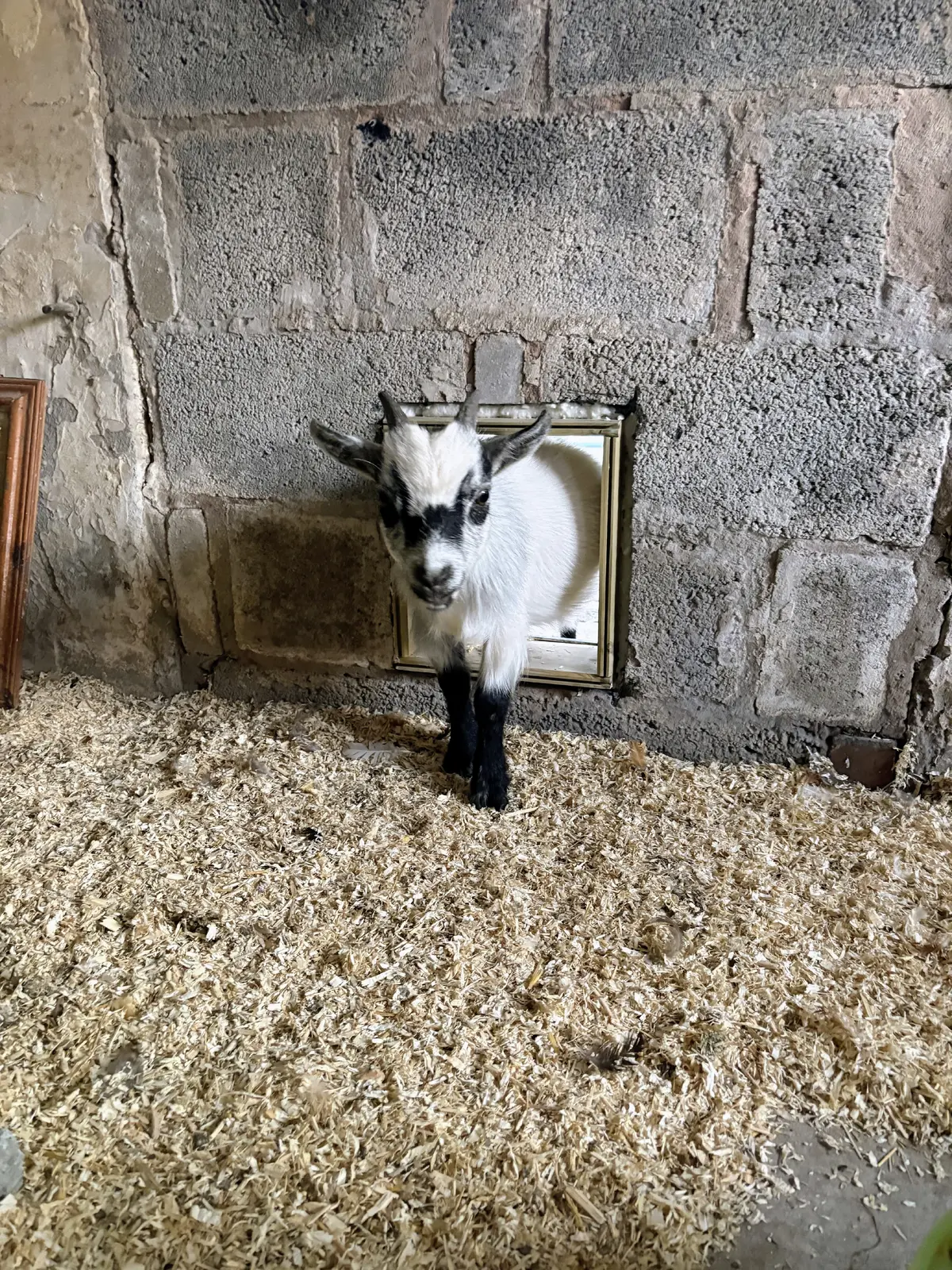
Thanks for reading this post via RSS. RSS is ace, and so are you. ❤️
You can reply to this post by email, or leave a comment.
-
The Manipulation Expert: 4 Hidden Signs You’re Dealing With a Toxic Person
In today’s episode, you’ll learn the hidden signs of a manipulative, toxic person from the #1 researcher in the world on dark personalities, Dr. Leanne ten Brinke, PhD.
She is here to teach you how to spot the poisonous people that are hidden in plain sight around you – in your family, your community, and at work.
And, she’s giving you the science-backed guide to understand poisonous people: how they operate, how to spot the patterns early, and what to do when you realize you’re dealing with one.
Dr. ten Brinke is a professor at the University of British Columbia, where she directs the Truth and Trust Lab and has spent nearly two decades studying trust, deception, manipulation, and dark personality traits.
She wants to make one thing perfectly clear: most people are good.
But one poisonous person can create an enormous amount of stress, confusion, and pain.
This episode will help you recognize the pattern, trust what you’re seeing, neutralize their behavior, and know exactly what to do when you’re around them.
In this episode, you’ll learn:
-How to spot dark personality traits of narcissism, psychopathy, Machiavellianism, and sadism in daily life
-The #1 sign you’re being manipulated
-What gaslighting is, what it is not, and what to do when you’re being gaslit
-Why many toxic people seem charming at first
-How gossip can reveal a manipulative personality at work
-The simple ways to become more strategic instead of more emotional when dealing with difficult people
After listening, you will know exactly what to do to spot toxic behavior, handle manipulative people, and take back your peace and power.
For more resources related to today’s episode, click here for the podcast episode page.
If you liked the episode, check out this one next: 4 Signs of Emotionally Immature Parents & How to Heal
Connect with Mel:
- Order Mel’s new product, Pure Genius Protein
- Get Mel’s newsletter, packed with tools, coaching, and inspiration.
- Get Mel’s #1 bestselling book, The Let Them Theory
- Watch the episodes on YouTube
- Follow Mel on Instagram
- The Mel Robbins Podcast Instagram
- Mel's TikTok
- Subscribe to SiriusXM Podcasts+ to listen to new episodes ad-free
- Disclaimer
Hosted by Simplecast, an AdsWizz company. See pcm.adswizz.com for information about our collection and use of personal data for advertising.
dts.podtrac.com -
test
test xpost to wp
-
xpost to wordpress test w/asciidoc
Asciidoc here…
The four-network test: written in AsciiDoc on su.perstitio.us, rendered with inline syntax highlighting, and mirrored to WordPress over the firehose.
(defn survives-the-trip? [colors]
  ;; perstitio -> firehose -> browser -> wordpress
  (every? #(= % :intact) colors))

(survives-the-trip? (repeat 4 :intact))
;; => true, hopefully
And a little bash for contrast:
curl -s https://shjeflo.org/ | grep -c "color:#" && echo "phosphor confirmed" -
test xpost to wp
this should show up on wp
-
DistillFeed: RSS reader with AI-ranked items and summaries
Article URL: https://github.com/ibaaj/distillfeed
Comments URL: https://news.ycombinator.com/item?id=48972947
Points: 1
# Comments: 0
-
Textcaster is now RSC — Really Simple Conversations
Same project, new name and new home.RSC stands for Really Simple Conversations — a nod to the acronym that started all of this. It also says what the project actually does that a feed reader doesn't: posts, replies, and whole conversations travel as RSS, so following, threading, and federation work with nothing but open feeds.
New homes:
- rsc.rmdes.be — this instance
- alice.rmdes.be and bob.rmdes.be — the two federation peers
- the source code
Every old textcaster.app link still works (for a year) until the domain die.
The old domains now issue permanent, path-preserving redirects to their counterparts, so existing permalinks, feed URLs, and any conversation already federated out there keep resolving. Posts published before the move keep their original GUIDs on purpose — remote instances and readers won't see a flood of duplicates, and threads stay intact.
If you subscribe to a feed here, you don't need to do anything: the redirects are 301s, so well-behaved readers will quietly update their subscriptions to the new address.
One small thing if you have an account: you'll be signed out once. Session cookies are namespaced to the app name, so the rename invalidated them. Log back in and you're set.
-
📝 2026-07-19 19:09: Today was spent goat-proofing the automatic chicken door. We recently moved it to ground level...
Today was spent goat-proofing the automatic chicken door. We recently moved it to ground level and now the goats use it as a scratch post. 🐐
Thanks for reading this post via RSS. RSS is ace, and so are you. ❤️
You can reply to this post by email, or leave a comment.
-
@wjmaggos@liberal.city it doesn’t have that… At most if a lot of different insta...
@wjmaggos@liberal.city it doesn’t have that… At most if a lot of different instances existed, and were interlinked you would have distributed reach, can that be called social media boost? I don’t know… So yes currently #RSC is a social network with integrated RSS feeds, literally made for small communities with specific topics… Albeit it could also be used in different ways
-
I am not a developer and don't understand how this works. Can someone explain?
- Today we have our first example app for WordPress. We started with an app I wrote that keeps scripting.com in sync with daveverse.org, a WordPress site. I have the app running in a tab on my desktop, you don't need a server for this. We use WordLand to bridge us, but if you have good WordPress code that uses their API, you won't need that. This is also a firehose app, it doesn't read the feed, it lets rss.chat tell us, over a websocket when something new has been posted or updated. We need to break through in Inbound RSS. If every social site supported it, that would be the end of lock-in in the social web. Great place for WordPress to lead.
-
Way back in March as I was starting to work with Claude Code, I think -- we put together a pretty nice outliner that is remarkably feature-rich. I barely remember doing this. It's what got me moving in this direction, and next month we started doing what became rss.chat.
-
I wonder if it makes sense to try to implement standard.site in the context of rss.chat?
-
Software versions, in one place
Don Park asked for the version number in a tooltip, for telling a stale cached client from a current one. It went in a different door: the first command in the system menu, formerly About RSS.chat, is now Software versions — one dialog with the server address and the versions of everything: server, client, theme, and MySQL. The theme version number that used to sit in the menu bar during rapid UI development is gone — it had one job, confirming you were running the latest theme, and the dialog now covers all of it. Work by DW; his reply to Don is 353.
-
I wonder if it makes sense to try to implement standard.site in the context of rss.chat?
-
Your personal feed reader is open — subscribe & manage is live
The per-user feeds milestone is complete. SP1 built the engine, SP2 gave you the four tabs — and now the part you actually touch is here: subscribing to feeds and managing who you follow, fully self-serve. No admin required.
Subscribe, right from home
There's a subscribe form on the home page now:
- Paste any feed URL —
https://their-site.com/feed.xml - Say what it is: a site or publication, or an individual
- Hit Subscribe
Where you land depends on what you subscribed to:
You subscribed to… …you land on a person or a web feed Personal, filtered to your new feed an instance / peer Federated a feed on this instance (even your own) Personal — resolved locally, no duplicate shadow It's rate-capped and SSRF-checked — you can't blow past the per-user limit or point it at internal addresses. And like everything here, the form is a plain post: it works without JavaScript.
Manage who you follow
Your following page is now a real manager:
- Your own
/u/<you>/following→ "Your subscriptions," each row with an Unfollow button, plus a "Follow someone" box. - Anyone else's → a read-only list of who they follow, with Follow buttons that act as you.
Personal river looking empty? Home nudges you: "follow people and feeds to fill it."
For admins
A new Settings tab under
/adminexposes Max subscriptions per user — tune the per-user cap live, no config edit.So that's the whole loop: subscribe → read your Personal river → manage → done. Textcaster is a feed reader with a social layer now, end to end. 📡
- Paste any feed URL —
-
We're working on a new example toolkit, this is a test post to see if it worked.